

How to Find Authentic Suzani Fabric: A 2026 Guide
Table of Contents
- What Suzani Is and Why Authenticity Matters
- Understanding Suzani Embroidery Techniques
- Regional Styles and How to Identify Them
- Vintage Suzani Textiles vs. Contemporary Pieces
- A Practical Authenticity Checklist
- Where to Buy Authentic Suzani Fabric
- Condition, Care, and Conservation
- Frequently Asked Questions
Last Updated: October 20, 2026
What Suzani Is and Why Authenticity Matters
Suzani is a form of hand-embroidered textile originating from Central Asia, characterized by intricate silk or cotton thread work on a fabric base of cotton or silk. The word comes from the Persian "suzan," meaning needle. What makes suzani compelling today is also what makes it vulnerable to counterfeiting: labor-intensive authentic pieces command attention, yet mass-produced imitations flood online marketplaces at a fraction of the cost.
Central Asian Origins and Cultural Significance
Suzani embroidery emerged as a significant art form in Central Asia, with documented traditions spanning centuries across cities like Bukhara, Tashkent, Samarkand, and Khiva. Each region developed distinctive styles influenced by local aesthetics, materials, and cultural practices. These weren't merely decorative objects; they were heirlooms passed through families and displayed during celebrations and weddings.
The craftsmanship that defines authentic suzani fabric reflects the values of the communities that created it: patience, precision, and a commitment to quality that cannot be rushed.
Why Counterfeit Suzani Floods the Market
Machine-embroidered pieces bearing the suzani aesthetic sell online for prices that make authentic hand-embroidered textiles seem unreasonably expensive by comparison. Sellers often misrepresent origin, age, and method of creation, banking on buyers' unfamiliarity with the telltale signs of authentic work.
Understanding Suzani Embroidery Techniques
Hand Embroidery vs. Machine Work
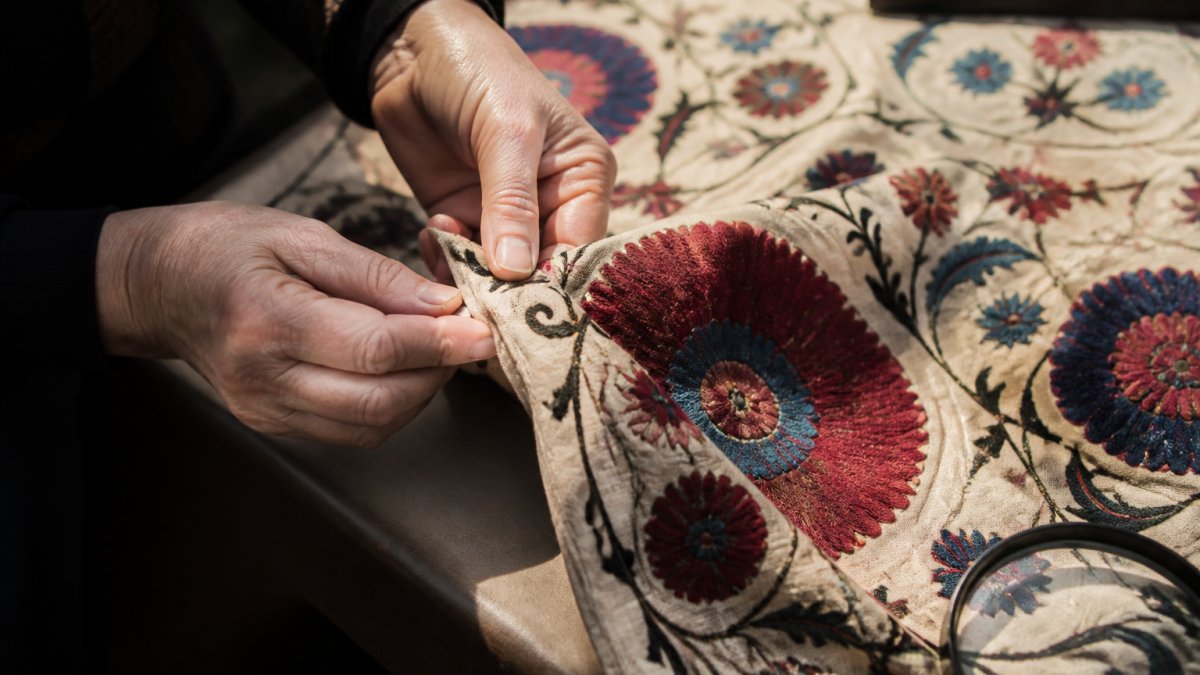
The most fundamental distinction between authentic suzani and counterfeit pieces is execution method. Hand embroidery, performed by individual artisans, produces variations in stitch length, tension, and spacing inherent to human work. These aren't flaws; they're signatures of authenticity.
Machine embroidery, by contrast, produces uniform, perfectly consistent stitches: identical tension throughout, unwavering spacing, and mechanically precise appearance. Under close inspection, authentic suzani fabric shows the natural rhythm of hand work: slight variations in how threads sit and organic flow from human movement rather than programmed precision.
A practical way to assess this: run your finger across the back of the textile. Authentic hand embroidery leaves loose threads, knots, and evidence of the embroiderer's technique on the reverse side.
Traditional Stitches: Chain, Satin, and Buttonhole
Authentic suzani embroidery employs traditional stitches refined over generations.
The satin stitch appears in areas requiring solid coverage, with threads laid parallel and close together for a smooth, lustrous surface.
The buttonhole stitch, less common than the other two, creates a reinforced edge or decorative border.
Examining stitches under magnification reveals whether they follow traditional patterns or show mechanical execution: authentic hand embroidery displays slight variations in stitch angle, occasional tension adjustments, and the natural flow of needle work.
Regional Styles and How to Identify Them
Bukhara, Tashkent, and Samarkand Distinctions
Regional suzani textiles developed distinct visual characteristics based on local traditions and materials.
Tashkent suzani displays more open compositions with larger, spaced-out motifs, lighter tones, and graceful, flowing designs, often showing exceptional refinement in stitch precision and thread quality.
Samarkand suzani occupies a middle ground, combining the density of Bukhara work with the elegance of Tashkent designs.
Authentic regional suzani demonstrates consistency with documented historical patterns from that area; counterfeits often blend characteristics from multiple regions indiscriminately.
Motif Meanings: Palak, Roundel, and Floral Designs
Traditional suzani embroidery employs motifs carrying cultural and symbolic meaning. The palak, a leaf-shaped design, appears frequently in flowing patterns suggesting movement and growth.
Floral motifs dominate most suzani designs, but authentic pieces render flowers with botanical awareness: petals, stamens, and leaves follow recognizable patterns from actual Central Asian plants.
Sun and moon motifs appear in some authentic suzani work, particularly ceremonial pieces, carrying spiritual significance in Central Asian culture. Understanding these motif meanings helps distinguish authentic suzani fabric from pieces that merely mimic the visual aesthetic.
Vintage Suzani Textiles vs. Contemporary Pieces
Distinguishing Antique, Vintage, and Newly Made
Each category displays distinct characteristics. Antique pieces show extended use, worn areas, faded colors from natural aging, and repairs using period-appropriate techniques, with a softness that comes only from decades of handling and storage.
Vintage pieces display moderate wear consistent with age: embroidery threads retain more vibrancy than antique work yet show genuine aging rather than artificial distressing.
Contemporary handmade suzani displays bright, fresh colors and pristine thread condition. The distinction lies not in age but in execution method: contemporary pieces created by traditional methods remain authentic suzani fabric, while machine-embroidered pieces do not.
Age Markers: Fabric Wear, Color Fading, and Thread Quality
Authentic aging produces recognizable patterns.
Fabric wear in authentic pieces concentrates in areas of natural use: along folds, around edges, and in central areas where the textile was frequently handled or displayed.
Thread quality provides crucial dating information.
Contemporary thread, even natural silk or cotton, displays modern production characteristics: consistent color, uniform thickness, and a sheen that differs from aged thread.
A Practical Authenticity Checklist
Fabric Base and Thread Composition
Authentic suzani fabric employs specific material combinations that reflect historical availability and artisan preferences.
The embroidery threads in authentic suzani consist of silk, cotton, or wool, materials available in Central Asia historically.
Run your fingers across both the front and back of the textile.
Visual Inspection for Hand Work
Examine the embroidery under strong light using magnification if possible. Authentic hand embroidery displays:
- Stitch length variation within the same design element
- Occasional thread skips or adjustments where the embroiderer corrected tension
- Natural rhythm in the stitch spacing rather than mechanical precision
- Visible needle holes that show the actual path the needle took through the fabric
- Thread ends on the reverse side that demonstrate individual stitch placement
Machine embroidery displays:
- Perfect uniformity in stitch length and spacing
- Mechanical precision with zero variation in tension
- Perfectly consistent needle hole placement
- Clean thread runs on the back following predictable patterns
- An overall appearance that seems too perfect for human execution
Look at the corners and edges of design elements. Authentic hand work shows the embroiderer's technique at directional changes, slight hesitations, tension adjustments, or creative solutions to technical challenges. Machine work maintains identical precision at every point.
Provenance and Seller Verification
Understanding where a suzani piece originates and who has owned it provides crucial authenticity information.
Verify seller credibility by examining their business history, customer reviews, and willingness to provide detailed information. Authentic dealers typically specialize in Central Asian textiles and can discuss regional characteristics, historical context, and specific details about individual pieces.
Request photographs showing multiple angles of the textile, including close-ups of the embroidery, the fabric base, and the reverse side. Legitimate sellers provide these without hesitation.
| Authentication Marker | Authentic Suzani | Mass-Produced Counterfeit |
|---|---|---|
| Stitch uniformity | Variable, hand-executed | Perfect mechanical precision |
| Fabric base | Hand-woven, visible texture | Machine-woven, uniform smoothness |
| Thread ends (reverse) | Loose, knotted, evidence of hand work | Clean, uniform, machine-run patterns |
| Color aging | Uneven, organic fading patterns | Uniform or artificially distressed |
| Motif consistency | Regional style markers present | Generic flower shapes, mixed regions |
| Seller information | Detailed provenance, historical context | Minimal information, vague origin |
Where to Buy Authentic Suzani Fabric
Direct Artisans and Cooperative Marketplaces
The most direct path to authentic suzani fabric connects you with artisans or cooperatives in Central Asia.
Cooperative marketplaces operated by Central Asian communities often provide detailed information about the embroiderers who created each piece: the artisan's name, region, and specific techniques. This transparency provides confidence in authenticity while supporting the communities that maintain this textile tradition.
When purchasing directly from artisans or cooperatives, expect to receive pieces that reflect current production methods while honoring traditional techniques.
Evaluating Online Sellers and Marketplace Listings
Online marketplaces have democratized access to suzani textiles but have simultaneously enabled counterfeiting at scale. Evaluate sellers using specific criteria:
- Detailed product descriptions including dimensions, materials, region, and estimated age
- Multiple high-quality photographs showing the front, back, and close-up details
- Clear statement about embroidery method (hand-embroidered vs. machine-embroidered)
- Transparent pricing that reflects the actual materials and labor involved
- Customer reviews from verified buyers discussing authenticity and quality
- Return policies that demonstrate seller confidence in their products
- Willingness to answer detailed questions about specific pieces
Sellers of authentic suzani fabric typically price pieces according to age, size, condition, and regional origin.
Examine product photographs critically. Authentic hand embroidery displays the characteristics discussed above, visible stitch variation, evidence of hand work on the reverse, and the organic quality of human creation.
Read customer reviews carefully, particularly those discussing authenticity concerns or quality issues. Patterns of complaints about misrepresentation indicate unreliable sellers; detailed positive reviews discussing specific authenticity markers indicate reputable sources.
Condition, Care, and Conservation
Authentic suzani fabric requires thoughtful care to preserve its integrity and appearance.
Store suzani pieces flat or loosely rolled, never folded, to prevent permanent creases in the fabric.
Handle suzani textiles with clean, dry hands.
Cleaning authentic suzani fabric requires caution.
Pieces with delicate embroidery, loose threads, or significant age should be professionally cleaned by textile conservators specializing in embroidered textiles.
Repairs to damaged suzani should be undertaken by experienced textile conservators.
Finding authentic suzani fabric demands more than casual online browsing.
Frequently Asked Questions
What is the difference between authentic suzani fabric and machine-made imitations?
Authentic suzani is hand embroidered on a cotton or silk fabric base using traditional stitches like chain stitch, satin stitch, and buttonhole stitch. Hand work shows irregular stitch lengths, visible knots on the reverse, and natural color variations in silk or cotton threads. Machine-made imitations display uniform, perfectly spaced stitches and lack the depth and texture of genuine hand embroidery.
How do you distinguish antique, vintage, and contemporary suzani textiles?
Antique suzani shows significant fabric wear, natural fading from age, and brittle threads. Vintage pieces display moderate wear and color variation, with threads still holding strength. Contemporary suzani has vibrant colors, minimal wear, and threads in excellent condition.
What should you check before buying a vintage suzani textile?
Inspect for stains, holes, or significant tears that affect wearability. Check thread condition by gently tugging; brittle threads may break further. Examine the fabric base for rot or weakness, especially in cotton pieces stored in humid conditions. Look for color bleeding between threads, which indicates poor-quality dyes. Ask the seller about provenance: where it was made, who owned it, and how it was stored. Request close-up photos of both sides, especially seams and the reverse of embroidery work.
How can you verify the provenance and authenticity of a suzani seller?
Reputable sellers provide detailed documentation: region of origin, estimated age, materials used, and artisan or family history if known. Check for customer reviews mentioning authenticity and condition accuracy. Ask sellers direct questions about their sourcing, legitimate dealers can explain their supply chain. Verify they offer detailed close-up photos showing stitch work, fabric base, and any wear or repairs. Be cautious of sellers using vague descriptions like 'handmade' without specifying region, materials, or age. Request a return policy for authenticity disputes.
What suzani embroidery techniques indicate hand work rather than machine production?
Hand embroidery shows variations in stitch length and angle, with threads occasionally skipping or overlapping slightly. Examine the reverse side: genuine hand work has knots, loose thread ends, and uneven tension marks. Machine work displays perfectly uniform stitches and a clean, flat reverse. Look for the palak (main roundel motif) and traditional floral designs, intricate, layered hand embroidery creates subtle shading and depth that machines cannot replicate. Hand-stitched pieces feel thicker and more textured due to natural thread buildup.
Where can you buy authentic suzani fabric from verified artisans?
Direct sources include cooperative marketplaces connecting Central Asian artisans to international buyers, which provide transparency on maker identity and region. Specialty textile retailers focused on heritage crafts often source directly and provide provenance documentation. Online platforms with seller verification and detailed reviews allow you to assess credibility through customer feedback and return policies. Avoid mass-market platforms where sellers cannot verify hand embroidery or regional origin. Request seller credentials, artisan names when possible, and detailed product descriptions including materials, techniques, and age.
What materials should authentic suzani fabric contain?
Genuine suzani uses cotton or silk as the fabric base, with embroidery threads in silk, cotton, or wool. Older pieces typically feature hand-loomed cotton with visible irregularities in weave. Contemporary work often uses commercial cotton or silk for consistency. Check thread composition by examining color and sheen: silk threads have a lustrous finish and smooth appearance, cotton is more matte, and wool adds texture. Avoid pieces with synthetic threads or polyester bases, these indicate modern machine-made imitations. Request material specifications from sellers before purchasing.