

Authentic Ikat Accessories: Where to Buy & How to Verify
Table of Contents
- What Makes Authentic Ikat Accessories Worth the Investment
- How to Identify Authentic Ikat: What Separates Handwoven from Mass-Produced
- Understanding Ikat Textile Heritage and Regional Variations
- Where to Buy Authentic Ikat Accessories Online
- Styling Ikat Accessories with Modern Outfits
- Ikat Fabric Care Guide: Preserving Your Investment
- Supply Chain Transparency: Supporting Ethical Artisanal Production
- Frequently Asked Questions
Last Updated: September 25, 2026
What Makes Authentic Ikat Accessories Worth the Investment
Authentic ikat accessories represent more than a fashion choice, they're a connection to centuries of handwoven textile heritage. The difference between genuine handloom ikat and mass-produced imitations comes down to craftsmanship, materials, and the stories woven into every piece.
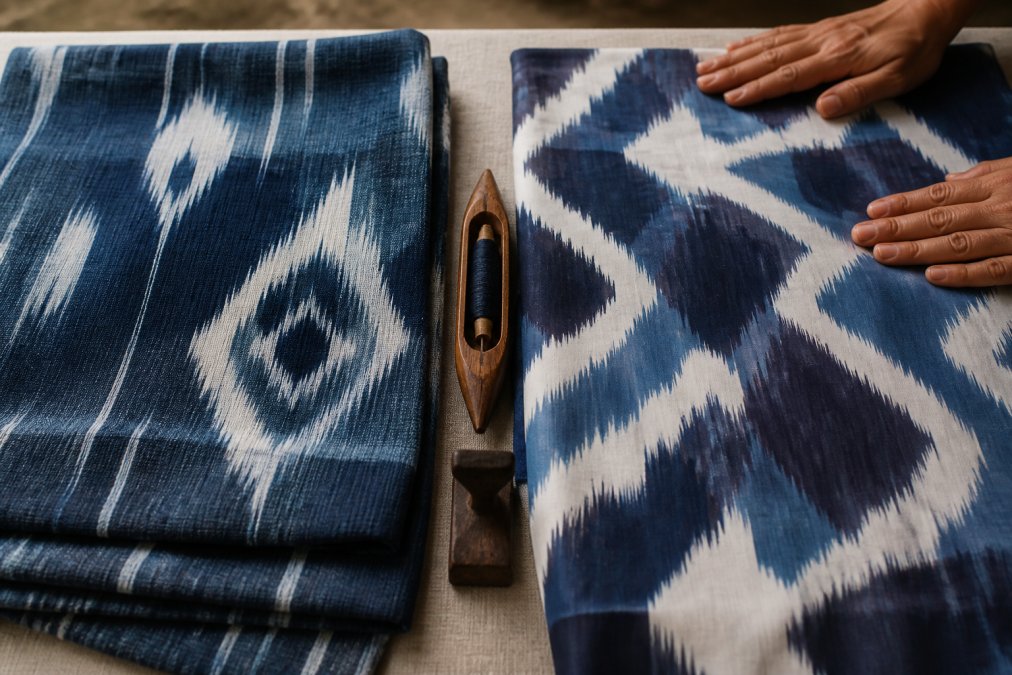
When you invest in authentic ikat accessories, you're supporting artisanal traditions that have survived for generations. Handwoven textiles require labor: dyers carefully prepare warp or weft threads, then weavers work at traditional looms to create those distinctive blurred patterns that define ikat's aesthetic. This process cannot be rushed or mechanized without losing the character that makes ikat unmistakable.
The investment pays dividends in longevity and uniqueness. Each handwoven piece carries subtle variations, no two are identical, which means you own something truly one-of-a-kind.
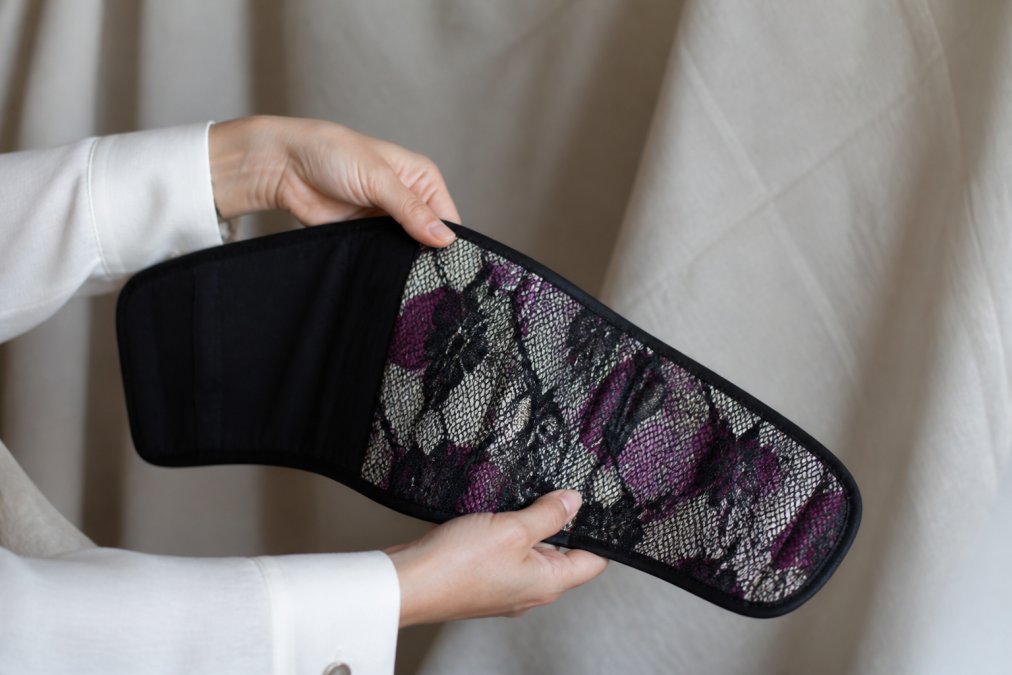
Sadri Couture understands this value proposition deeply. The brand's Marvorid Reversible Ikat Corset Belt ($98.00) exemplifies how authentic ikat can be integrated into modern wardrobes without compromising either heritage or wearability. The piece layers signature Sadri ikat beneath delicate French lace, then reverses to reveal a sleek black finish, a design choice that respects textile tradition while acknowledging contemporary styling needs.

How to Identify Authentic Ikat: What Separates Handwoven from Mass-Produced
Distinguishing genuine handloom ikat from machine-made imitations requires understanding what happens at the loom. Authentic ikat begins with a dyeing process where artisans resist-dye individual threads before weaving, a technique that demands precision and patience.
The visual signature of true ikat is its characteristic blur. The pattern edges appear slightly soft, never perfectly sharp, because the dyeing process inherently creates subtle gradations where dyed and undyed sections meet. Mass-produced "ikat-look" textiles achieve sharpness through printing, which eliminates this natural softness entirely.
Texture tells another story. Run your fingers across genuine handwoven ikat and you'll feel the natural variation in weave density. Handlooms create subtle irregularities that reflect the weaver's rhythm and the loom's character. Machine-produced fabrics feel uniform, almost sterile by comparison. This tactile difference becomes especially apparent in pieces like the Noor Ikat Corset ($149.00), where the structured construction relies on fabric integrity that only comes from true weaving.

The Authentication Checklist
Use this framework when evaluating any ikat accessory:
| Authentication Factor | What to Look For | Red Flag |
|---|---|---|
| Pattern edges | Soft, slightly blurred transitions | Sharp, perfectly defined lines |
| Weave density | Visible subtle variations in thread spacing | Uniform, mechanical consistency |
| Dye saturation | Color variation across the piece reflecting natural dyeing | Uniform color, printed appearance |
| Reverse side | Pattern visible from back (dye penetrated fiber) | Blank or different pattern on reverse |
| Weight and drape | Substantial, with natural movement | Stiff or overly lightweight |
| Selvage edges | Visible handloom selvage or natural edge finishing | Machine-cut, uniform edges |
The most reliable single indicator is examining both sides of the fabric. In authentic handwoven ikat, the pattern appears on both the front and back because the dye has saturated the yarn. Printed imitations show the pattern only on the surface. This difference alone eliminates most counterfeits immediately.
Understanding Ikat Textile Heritage and Regional Variations
Ikat's story spans continents and centuries, with distinct regional traditions that shaped how different cultures approached this demanding craft. Understanding these variations helps you appreciate why authentic pieces carry such cultural significance.
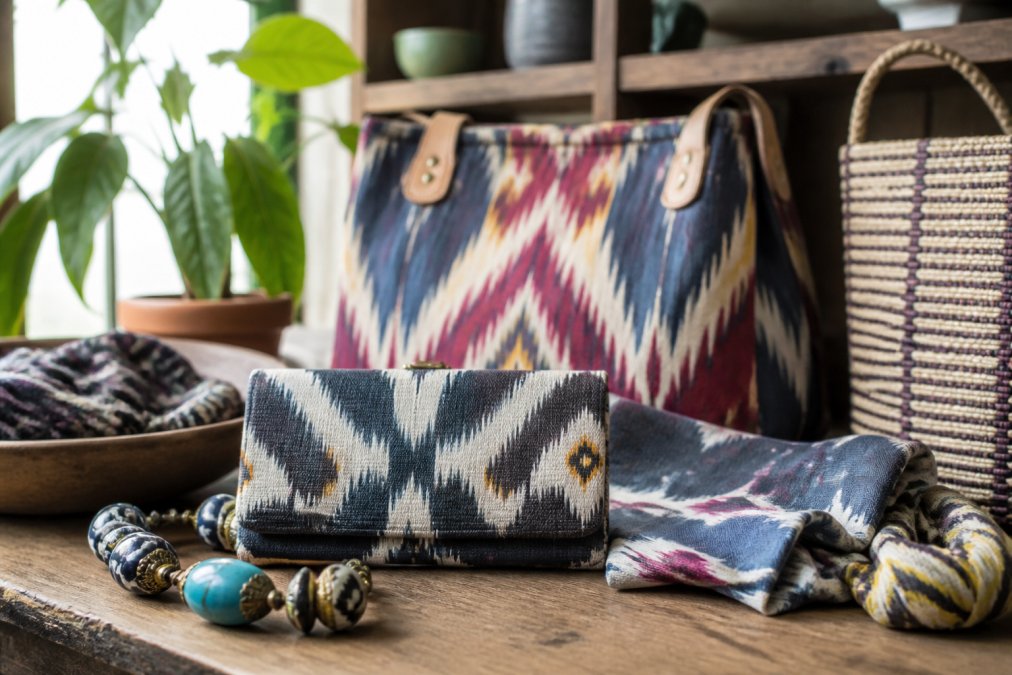
Central Asian ikat, particularly from Uzbekistan and Tajikistan, represents one of the most refined expressions of the technique. Samarkand and Bukhara became legendary centers for ikat production, where artisans developed sophisticated color palettes and geometric patterns that reflected both Persian and Chinese influences. The textiles emerging from these regions feature characteristic deep jewel tones, rich indigos, crimsons, and golds.
Indonesian ikat traditions developed independently, emphasizing different aesthetics. Balinese and Javanese weavers created more figurative, symbolic patterns rooted in spiritual traditions. Indian ikat, concentrated in regions like Andhra Pradesh and Gujarat, developed its own vocabulary of patterns and color combinations. Each regional tradition reflects the available dyes, cultural values, and trade routes that connected communities.
These distinctions matter practically. A piece labeled "Central Asian ikat" should display characteristics consistent with Samarkand or Bukhara traditions, specific color combinations, pattern structures, and weaving techniques.
Sadri Couture draws specifically from Central Asian heritage, with designs rooted in Samarkand textile traditions. This geographic specificity isn't marketing language, it reflects actual design methodology and sourcing practices that distinguish the brand's aesthetic from generic "global ikat" offerings.
Where to Buy Authentic Ikat Accessories Online
Finding genuine handwoven ikat accessories online requires knowing which vendors have direct relationships with artisans or legitimate sourcing practices. The market includes everything from direct-to-consumer brands working with specific weaving communities to curated retailers specializing in heritage textiles.
Marvorid Reversible Ikat Corset Belt →
Direct-to-consumer brands offer transparency advantages. When you purchase from a label that designs and sources its own ikat pieces, you can often trace the supply chain and understand exactly where textiles come from. Sadri Couture operates this model, the brand works with specific artisanal producers and maintains quality control over every piece. The Noor Ikat Skirt ($149.00) exemplifies this approach: the piece combines an ivory and beige ikat-inspired pattern with a sheer organza overlay, created through a made-to-order process.

Specialized heritage textile retailers also merit consideration. These vendors curate pieces from multiple artisan communities, often providing detailed provenance information. They typically charge premium prices.
Avoid marketplace platforms that treat ikat as a generic category. When sellers list dozens of ikat items without distinguishing between handwoven and printed pieces, or without providing any supply chain information, assume the worst. Legitimate vendors take time to educate customers about what they're selling.
Styling Ikat Accessories with Modern Outfits
The persistent worry that authentic ikat accessories feel too formal or costume-like for everyday wear reflects a fundamental misunderstanding of how heritage textiles function in contemporary fashion. The key is treating ikat as a statement element that anchors an outfit, not as a costume piece that dominates it.
Ikat accessories work best when paired with neutral, well-fitting basics. The Marvorid Reversible Ikat Corset Belt demonstrates this principle perfectly. Wear the ikat side over a crisp white shirt and tailored trousers for professional settings, or reverse it to the black side for a more minimal aesthetic. The reversibility itself solves the "costume" problem by offering two distinct styling options from a single piece.
Layering proves essential. A structured ikat corset belt over a fitted dress creates visual interest without overwhelming the silhouette. The same belt worn over a simple sweater and jeans elevates casual styling. The key is ensuring the ikat piece has breathing room, don't pair multiple patterned items together, and let the textile be the focal point rather than competing with busy prints elsewhere in your outfit.
Color coordination matters more with handwoven ikat than with printed alternatives. The color palette often includes unexpected undertones. A piece with indigo and crimson might contain subtle rust or ochre tones. Working with these natural variations, rather than against them, produces more sophisticated outfits. Pair warm-toned ikat with earthy neutrals and jewel tones. Cool-toned pieces work with grays, blacks, and silver accessories.
The Noor Ikat Corset's ivory and beige palette demonstrates how subtle ikat can integrate into professional wardrobes. Wear it with tailored separates for business settings, or pair it with a flowing skirt for occasions requiring more formal dress. The structured construction means the piece holds its shape whether styled casually or formally.
Ikat Fabric Care Guide: Preserving Your Investment
Proper care extends the life of authentic ikat accessories dramatically. The handwoven construction that makes these pieces special also require more attention than conventional garments.
Dry cleaning is the safest approach for most ikat pieces.
Supply Chain Transparency: Supporting Ethical Artisanal Production
The difference between authentic ikat and mass-produced imitations extends beyond aesthetics to ethics. Genuine handwoven textiles support artisan communities and preserve cultural traditions.
Frequently Asked Questions
How can you tell if ikat fabric is authentic?
Authentic ikat shows natural color variation and slightly irregular edges where the dye meets undyed areas, a signature of the warp-dyed or weft-dyed weaving process. Handwoven ikat has visible weave texture, softer drape, and subtle imperfections that mass-produced pieces lack. Check the selvage (fabric edge) for handloom characteristics, and examine the back of the textile, authentic ikat maintains pattern consistency front and back. Genuine pieces often include documentation of origin and weaver information.
What is the difference between printed ikat and woven ikat?
Woven ikat is created by hand-dyeing the threads before weaving, producing color variation and soft edges inherent to the process. Printed ikat applies the pattern to finished fabric using screens or digital printing, resulting in sharp, uniform edges and consistent color. Woven ikat has depth, texture, and a lived-in quality; printed ikat appears flatter and more uniform. Authentic handwoven ikat costs significantly more because of the labor-intensive dyeing and weaving process.
Why is authentic ikat considered a luxury textile?
Authentic ikat requires skilled handwork: artisans hand-dye threads, then handweave them on traditional looms. Each piece is one-of-a-kind due to natural color variation and the artisan's individual technique. The craftsmanship, sustainable production methods, and limited supply make genuine ikat accessories luxury items. Pieces from heritage regions like Central Asia command premium prices because they represent centuries of cultural textile knowledge.
Can I wear authentic ikat accessories with everyday outfits?
Yes. Authentic ikat accessories are designed for modern wardrobes. A reversible ikat corset belt, for example, pairs with dresses, tailored separates, or even denim, the reversible design offers flexibility for different styling occasions. Ikat skirts work with fitted tops or blouses for professional settings. The key is choosing pieces that complement your existing wardrobe rather than treating them as costume pieces. Sadri Couture's collections are designed specifically for seamless integration into contemporary daily wear while expressing cultural heritage.