

Handwoven vs Printed Ikat: Quality Guide
Table of Contents
- Handwoven Ikat vs Printed Ikat: Quality Comparison
- The Resist Dyeing Process in Handwoven Ikat
- Visual and Structural Differences
- How to Identify Genuine Handwoven Ikat
- Are Ikat Fabrics Durable for Work
- Care Instructions for Handwoven Ikat
- Cost Differences and Value Proposition
- Environmental Impact and Ethical Sourcing
- Frequently Asked Questions
Last Updated: September 23, 2026
Handwoven Ikat vs Printed Ikat: Quality Comparison
Understanding the difference between handwoven ikat and printed ikat quality is essential when selecting authentic Central Asian textiles, as handwoven ikat printed ikat quality standards vary significantly. Handwoven ikat represents centuries of resist-dyeing tradition, where artisans tie yarn before weaving to create intricate patterns. Printed ikat, by contrast, uses machine printing to replicate the aesthetic without the labor-intensive dyeing process.
The gap between these two methods affects durability, cost, environmental impact, and the cultural authenticity of what you're wearing. This guide breaks down exactly what separates genuine handwoven ikat from its printed counterpart, how to identify each, and whether either truly holds up to everyday wear.
What Defines Handwoven Ikat
Handwoven ikat is a textile created through an ancient resist-dyeing technique where artisans bind sections of yarn before immersing them in dye, creating patterns that emerge only after the yarn is woven into fabric. The process requires months of preparation and skilled labor, beginning with careful planning of the pattern design. Each warp or weft thread must be individually tied and dyed, with multiple dyebaths creating complex color combinations.
The resist-dyeing process in handwoven ikat produces inherent irregularities. No two pieces are identical because yarn tension, dye absorption, and weaving imperfections create natural variation. This is not a flaw, it's a signature of authenticity. The pattern appears slightly blurred at the edges, a characteristic known as "ikat blur" or "feathering," which occurs because dye penetrates tied sections unevenly.
What Defines Printed Ikat
Printed ikat applies the ikat pattern to pre-woven fabric using digital or screen printing technology. The fabric itself is typically machine-loomed from standard yarn, then the pattern is printed onto the surface. This method dramatically reduces production time, from months to days, and eliminates the labor-intensive dyeing phase.
Printed ikat offers visual similarity to handwoven pieces at a fraction of the cost and production complexity. However, the pattern exists only on the fabric surface. The fiber beneath remains undyed, which creates a fundamentally different textile experience in terms of durability, hand-feel, and color fastness.
The Resist Dyeing Process in Handwoven Ikat
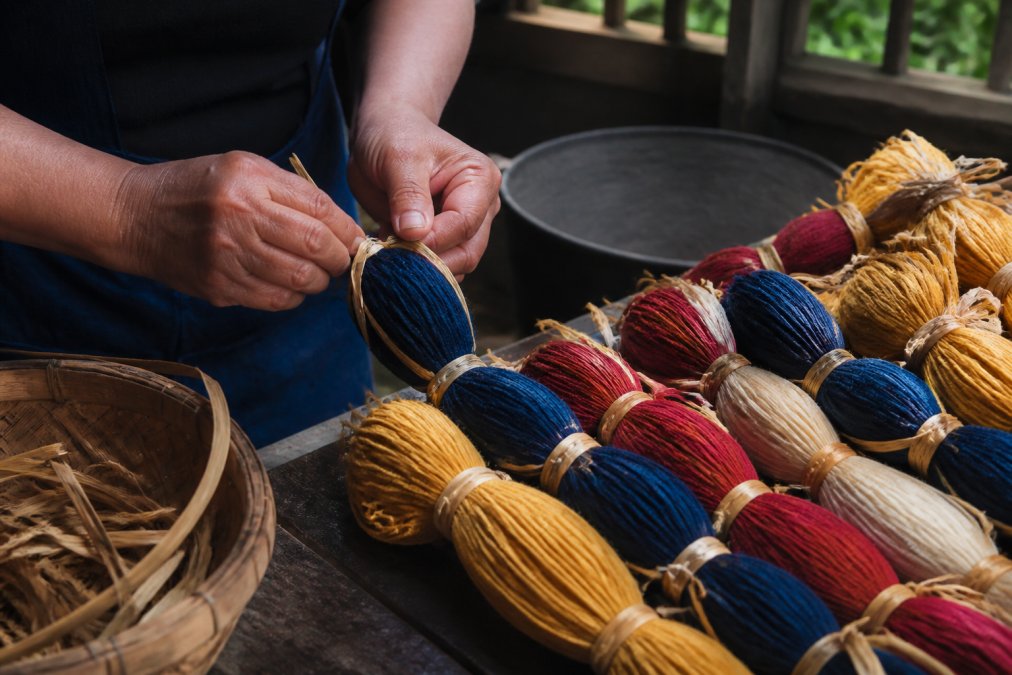
The resist-dyeing process in handwoven ikat begins with meticulous yarn preparation. Artisans map the desired pattern, then bind specific sections of yarn tightly with thread or raffia. These bound areas resist dye absorption, creating the pattern when the yarn is later immersed in dye vats.
The complexity multiplies with double ikat, where both warp and weft threads are resist-dyed before weaving. This technique, rare and highly valued, requires such precision that even slight misalignment creates visible pattern shifts. The dyer must account for how threads will intersect on the loom, a calculation that demands years of experience.
Fiber penetration is complete in handwoven ikat. Dye molecules bond with the fiber itself, not just the surface. This means the color remains consistent from front to back, and the pattern integrity persists through repeated washing and wear. The dyed yarn then goes to the loom, where hand-loomed construction adds another layer of structural variation, tension fluctuations create subtle texture changes that contribute to the fabric's depth and authenticity.
Visual and Structural Differences
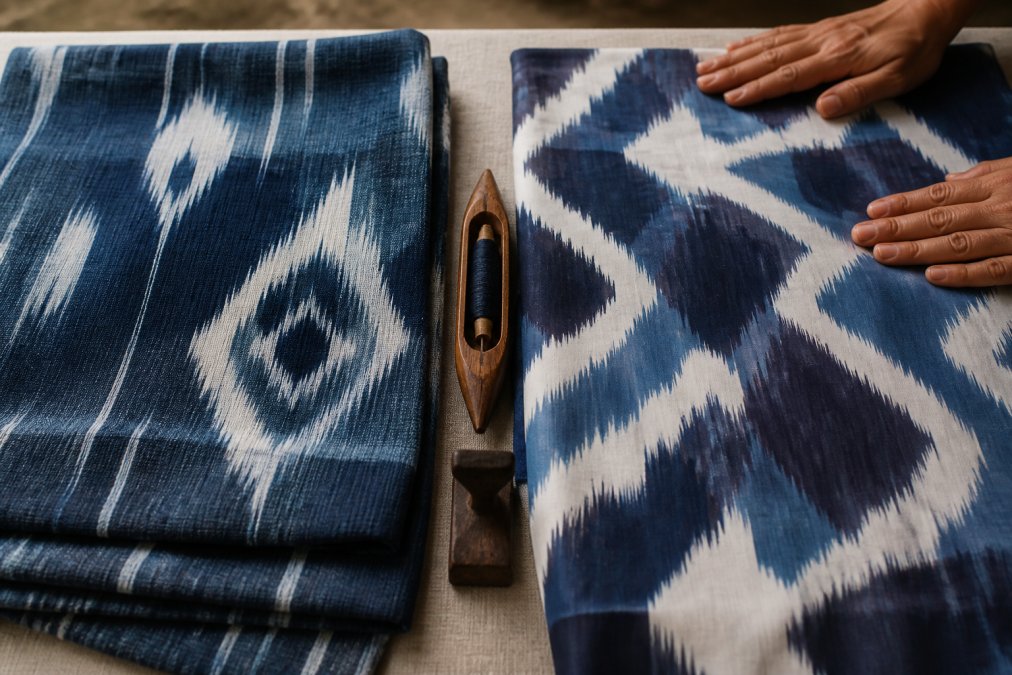
The most immediate difference in handwoven ikat printed ikat quality appears in how the pattern behaves. Handwoven ikat displays soft, feathered edges where the pattern meets undyed sections, a result of dye bleeding slightly during the resist process. Printed ikat shows crisp, defined edges because the pattern is applied mechanically to already-woven fabric.
Reverse Side Pattern Analysis
Flip a handwoven ikat textile over. The pattern remains visible on the back, though often slightly softer or less saturated than the front. This happens because dye penetrated the entire fiber structure. The reverse side looks intentional, not accidental, the same pattern exists throughout the fabric's depth.
Printed ikat reverses to reveal the undyed base fabric. The back shows little to no pattern detail, only the natural color of the untreated fiber. This distinction is perhaps the single most reliable way to identify genuine handwoven ikat. If the reverse side is blank, the piece is printed.
Texture and Weaving Imperfections
Run your hand across handwoven ikat. You'll notice subtle irregularities in weave density, slight thickness variations, and an uneven surface that catches light differently across the fabric. These weaving imperfections are not defects, they're evidence of hand-loomed construction. Warp and weft threads vary slightly in tension, creating the three-dimensional quality that gives handwoven ikat its characteristic depth.
Printed ikat feels uniform. Machine-woven fabric maintains consistent tension throughout, producing a smooth, predictable surface. The texture is pleasant but flat compared to hand-loomed alternatives. When you run your fingers across printed ikat, the sensation is consistent, no surprises, no variation.
How to Identify Genuine Handwoven Ikat
Identifying genuine handwoven ikat requires checking multiple markers. Start with the reverse side test: authentic handwoven ikat shows the pattern on the back. Printed ikat shows only the base fabric color.
Examine the pattern edges closely.
Are Ikat Fabrics Durable for Work
Handwoven ikat fabrics demonstrate strong durability for regular wear, including professional settings. The fiber penetration from resist dyeing means color remains stable through repeated washing and exposure to light. The hand-loomed structure, while varied, creates a fabric that strengthens slightly with age as fibers compress and settle.
Care Instructions for Handwoven Ikat
Handwoven ikat requires professional dry cleaning to preserve color fastness and structural integrity. Machine washing risks color bleeding, especially if the resist dyeing wasn't fully set, and the agitation can stress hand-loomed fibers. Hand washing in cool water with gentle soap is acceptable for lightly soiled pieces, but dry cleaning remains the safest approach.
Cost Differences and Value Proposition
Handwoven ikat commands higher prices because of the labor and time invested. A single handwoven ikat garment represents months of artisan work across multiple stages: pattern design, yarn preparation, resist dyeing, weaving, and finishing. Production cannot be rushed without compromising quality. Expect handwoven ikat pieces to range significantly higher than printed alternatives.
Environmental Impact and Ethical Sourcing
Ethical sourcing matters more than the handwoven versus printed distinction. Seek suppliers who verify fair wages for artisans, safe working conditions, and sustainable dye practices. Many traditional ikat workshops operate in Central Asia, where labor standards vary widely. Reputable brands source directly from established cooperatives and family workshops with transparent supply chains.
| Aspect | Handwoven Ikat | Printed Ikat |
|---|---|---|
| Production Time | 3-6 months | 1-2 weeks |
| Pattern Visibility (Reverse) | Visible, slightly softer | Not visible |
| Pattern Edges | Feathered, soft blur | Crisp, defined |
| Texture Feel | Varied, three-dimensional | Uniform, flat |
| Color Fastness | Excellent (fiber-penetrated) | Good to fair (surface-applied) |
| Durability for Work Wear | Excellent | Good for occasional wear |
| Care Requirements | Professional dry clean | Dry clean or gentle wash |
| Cost Range | Premium | Accessible |
| Environmental Impact | Mixed (natural dyes, long timeline) | Mixed (synthetic dyes, fast production) |
| Authenticity | High (traditional technique) | Aesthetic only (printed replica) |
Frequently Asked Questions
How can you tell if ikat is handwoven or machine printed?
Handwoven ikat shows color bleeding and soft edge transitions on both sides of the fabric, while printed ikat has crisp, uniform pattern edges on the front and a blank reverse. Handwoven pieces display visible weaving imperfections, uneven yarn tension, and slight variations in pattern repeat. Run your finger across the pattern: handwoven ikat feels dimensional because the dye penetrates the yarn before weaving, while printed ikat feels flat with surface-only color. Examine the reverse side carefully, handwoven ikat mirrors the front pattern, whereas printed versions show no pattern on the back.
Are ikat fabrics durable for work or everyday wear?
Handwoven ikat fabrics are highly durable for everyday wear when properly cared for. The yarn-dyed construction means color is integral to the fiber, resisting fading from regular use and washing. Printed ikat offers less durability because surface dyes fade faster with friction and cleaning. Handwoven pieces withstand professional environments, layering, and frequent styling without degradation. The structured weaving creates fabric integrity that handles movement and wear. Pieces like Sadri Couture's Vintage Atlas Lace Corset ($245) and Marvorid Reversible Ikat Corset Belt ($98) combine ikat with durable construction for professional and casual settings.
What makes handwoven ikat more expensive than printed versions?
Handwoven ikat costs significantly more due to labor-intensive production. The resist dyeing process requires skilled artisans to hand-tie yarn sections before dyeing, repeat this for each color, then hand-loom the fabric on traditional looms, a process taking weeks per piece. Printed ikat uses industrial machinery to apply color to finished fabric in hours. Traditional craftsmanship, limited production runs, and the cultural preservation embedded in each piece add value. Sadri Couture's offerings reflect this investment: pieces command $98-$245 because they represent authentic heritage textile production.
How do you care for handwoven ikat to maintain its quality?
Handwoven ikat requires professional dry cleaning only, avoid machine washing and bleach. Store flat or hanging to preserve structure and prevent creasing. Steam on low heat from the reverse side if needed; never iron directly on the surface. Handle with care to avoid snagging, especially if layered with delicate overlays like lace. For pieces like the Marvorid Reversible Ikat Corset Belt, do not wash, bleach, or iron directly on lace. Proper storage away from direct sunlight prevents gradual fading. These care steps protect the yarn-dyed fibers and maintain the fabric's dimensional quality and color integrity over years of wear.
Is ikat considered a luxury textile?
Yes, handwoven ikat is a luxury textile due to its labor-intensive production, cultural significance, and superior quality. The resist dyeing and hand-looming processes require weeks of skilled artisan work, making each piece unique. The textile heritage of Central Asia adds cultural and artistic value. Printed ikat, while aesthetically similar, lacks this luxury classification because industrial production sacrifices authenticity and durability. Sadri Couture's pieces, from the Noor Ikat Corset ($149) to the Vintage Atlas Lace Corset ($245), represent accessible luxury that blends traditional craftsmanship with contemporary design.