


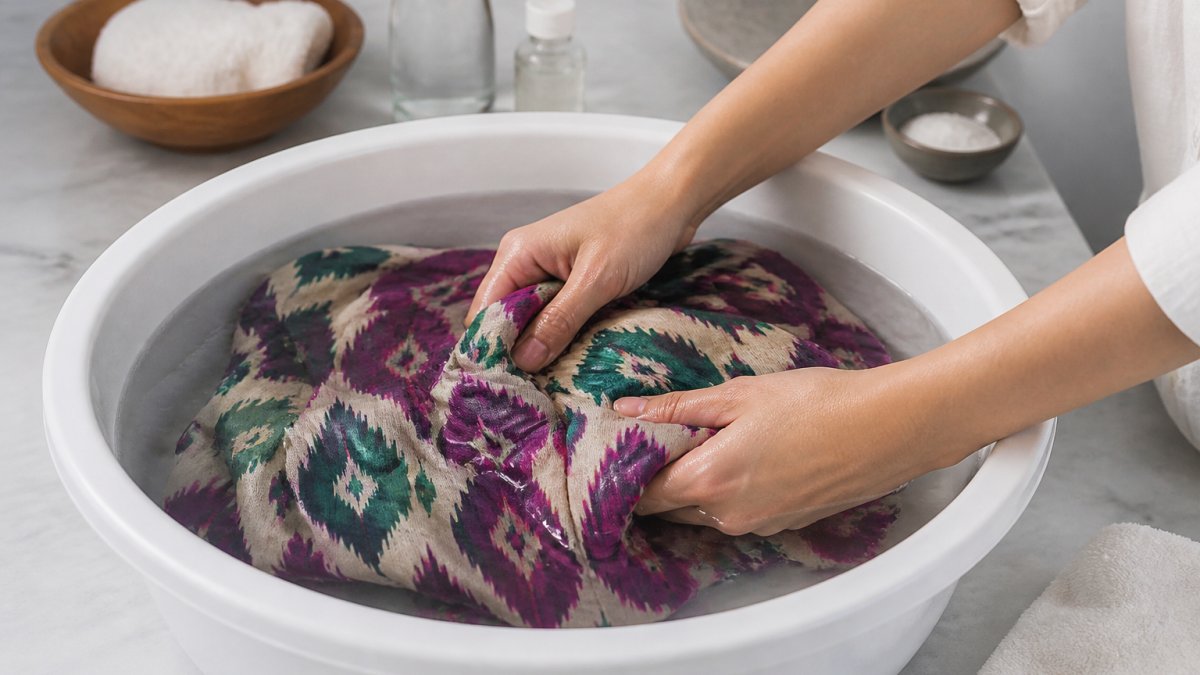
How to Wash Silk Ikat Garments: Complete Care Guide
Table of Contents
- Understanding Your Ikat Garment Before Washing
- How to Hand Wash Silk Ikat Garments
- How to Prevent Silk Color Bleeding During Washing
- How to Remove Stains from Silk Ikat Fabric
- How to Dry Silk Clothes After Washing
- When to Choose Professional Cleaning
- Caring for Sadri Couture Ikat Pieces
- Frequently Asked Questions
Last Updated: October 13, 2026
Understanding Your Ikat Garment Before Washing
Before you wash any silk ikat piece, take time to understand what you're working with. Ikat fabrics are hand-dyed using a resist-dyeing technique that creates those distinctive patterns. The dyes used in traditional ikat can shift or bleed if exposed to the wrong conditions. This is especially true for pieces made with natural dyes, which are more susceptible to color loss than synthetic alternatives.
At Sadri Couture, we know that proper care begins with knowledge. Every ikat garment tells a story through its construction and dye work. Understanding these details helps you preserve that story for years to come.
Check the Care Label
Your first step is always the care label. This small tag holds critical information about how your specific garment should be treated.
Look for these details:
- Fiber content (silk, silk blend, or other materials)
- Recommended washing method (hand wash, machine wash, dry clean only)
- Water temperature guidance
- Drying instructions
- Any special warnings about color bleeding or shrinkage
Many ikat garments recommend dry cleaning or hand washing only. If the label says "dry clean only," that's your signal to skip home washing entirely. Professional cleaners have specialized equipment and expertise for delicate fabrics.
If the label permits washing, follow its temperature and method recommendations. Labels exist for a reason. They're based on how the manufacturer tested the specific garment.
Identify the Fiber and Construction
Understanding your garment's fiber content and construction helps you anticipate how it will behave during washing.
Pure silk has a smooth, lustrous surface and drapes beautifully. It's delicate and requires gentle handling. Silk-blend fabrics mix silk with other fibers like cotton or synthetics, which can affect durability and dye stability.
Check the construction too. Is the ikat pattern printed on the surface, or is it woven into the fabric itself? Woven ikat patterns are more stable during washing because the dye is part of the fiber structure. Printed patterns sit on top of the fabric and can be more prone to fading or bleeding.
Examine the weave density. Tightly woven fabrics hold up better to washing than loosely woven ones. Run your hand over the garment. Does it feel sturdy or delicate?
Test for Colorfastness
Before committing to a full wash, test whether the dyes will bleed. This step takes five minutes and can save your garment.
Fill a small basin with cool water and add a drop of mild detergent. Submerge a hidden corner of the garment (inside a seam, under a hem) for two to three minutes. Gently agitate the fabric.
Remove the garment and check the water. Is it colored? If the water remains clear or nearly clear, the dyes are stable. If the water shows significant color, the dyes are likely to bleed during a full wash.
For ikat pieces with deep indigo, rich reds, or vibrant colors, always test first. Traditional natural dyes are beautiful but can be unpredictable. Even if your test shows some color release, you can still wash carefully using the hand-washing method below.
How to Hand Wash Silk Ikat Garments
Hand washing is the safest method for how to hand wash silk ikat garments. It gives you complete control over water temperature, agitation, and handling.
Gather Your Materials
You don't need much. Here's what you'll need:
- A clean basin or sink large enough for the garment to move freely
- Cool or lukewarm water (below 85°F is ideal)
- Mild detergent or pH-neutral soap (silk-specific detergents are best)
- A soft towel for excess water
- A clean, flat surface for drying
Avoid regular laundry detergent. It's too harsh for silk. Instead, use a gentle, pH-neutral option. Silk-specific detergents are formulated to protect delicate fibers and maintain the integrity of dyes.
If you don't have silk detergent, mild baby shampoo or soap flakes designed for delicate fabrics work well. The key is choosing something gentle.
The Hand Washing Process
Follow these steps to wash your silk ikat garment safely:
-
Fill your basin with cool water. Use water that feels cool to your wrist, around 65-75°F. Warm water can cause dyes to bleed and silk fibers to weaken.
-
Add detergent. Use only a small amount. A few drops of liquid silk detergent or a small pinch of soap flakes is enough. Too much soap is harder to rinse out.
-
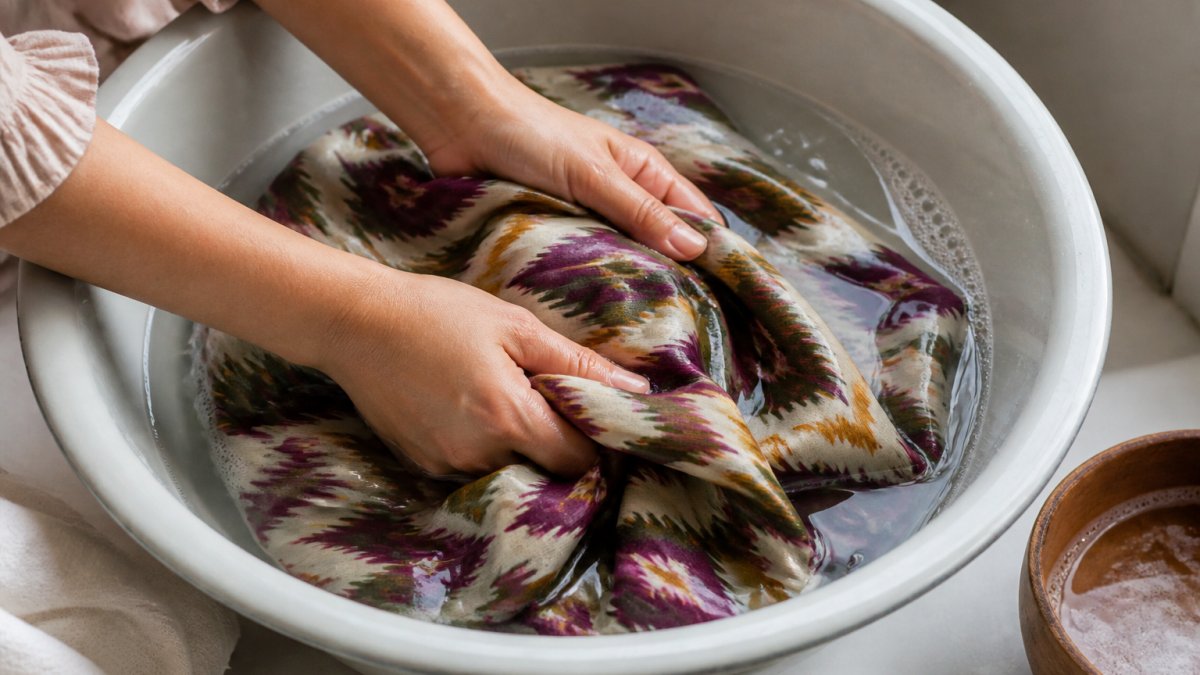
Submerge the garment. Let it soak for 5-10 minutes. This allows water and detergent to penetrate the fibers without aggressive agitation.
-
Gently swish, don't rub. Move the garment through the water with your hands using slow, gentle motions. Think of it as supporting the fabric rather than scrubbing it. Pay extra attention to areas that touch your skin (underarms, neckline, hemline) where dirt and oils accumulate.
-
Drain and rinse. Remove the garment and drain the soapy water. Refill the basin with fresh cool water and gently swish the garment again. Repeat until the water runs clear. This usually takes three to four rinses.
-
Remove excess water. Gently squeeze out water without wringing. Support the garment with both hands as you do this. Never twist or wring silk ikat pieces.
The entire process takes about 15-20 minutes. Your garment will feel noticeably cleaner and smell fresh.
How to Prevent Silk Color Bleeding During Washing
Color bleeding is the biggest risk when you wash silk ikat garments. These steps minimize that risk:
Use the coldest water possible. Cold water (below 65°F) is gentler on dyes than cool or lukewarm water. If your tap water is warm, let it sit in the basin for a few minutes to cool, or add ice cubes.
Keep washing time short. The longer dyes sit in water, the more likely they are to release. Limit soaking to 10 minutes maximum. Rinse quickly but thoroughly.
Separate by color for the first wash. If you're washing multiple ikat pieces, wash darker colors separately from lighter ones on the first wash.
Avoid mixing with other fabrics. Wash ikat pieces alone, especially on the first wash. If dyes do bleed slightly, you won't risk transferring them to other garments.
Use minimal detergent. More soap means more water needed for rinsing, which means more time for dyes to bleed. Keep it minimal.
Never soak overnight. Some delicate fabrics benefit from extended soaking, but ikat pieces don't. A 5-10 minute soak is plenty. Longer soaking increases color bleeding risk.
For pieces with natural indigo dyes, expect some color release even with careful washing. This is normal.
How to Remove Stains from Silk Ikat Fabric
Stains happen. The key is treating them quickly and gently.
Blot immediately. Don't rub. Use a clean, soft cloth to blot up liquid stains right away. Blotting absorbs the liquid without pushing it deeper into the fibers.
For fresh stains: Mix a small amount of mild detergent with cool water to create a weak solution.
For set-in stains: These are tougher. Make a paste of mild detergent and a tiny bit of cool water.
Test on a hidden area first. Before treating any stain, test your cleaning solution on an inconspicuous part of the garment.
Avoid harsh chemicals. Never use bleach, oxygen-based stain removers, or enzyme-based cleaners on ikat. These can damage fibers and alter dyes. Stick to mild detergent and water.
Know when to stop. If a stain doesn't respond to gentle treatment, stop. Over-scrubbing risks damaging the fabric. Professional dry cleaners have specialized techniques for stubborn stains.
How to Dry Silk Clothes After Washing
Drying is just as important as washing. Improper drying can cause shrinkage, wrinkles, and dye fading.
Remove excess water gently. After your final rinse, gently squeeze out water without wringing.
Never use a dryer. Machine drying is too harsh for silk. Heat can damage fibers and set wrinkles permanently.
Air dry flat. Lay the garment on a clean, flat surface away from direct sunlight. A clean towel, drying rack, or mesh surface works well.
Avoid direct sunlight. Sunlight can fade ikat dyes, especially natural ones. Dry in shade or indoors near a window with indirect light.
Don't hang while wet. Hanging wet silk can cause stretching and distortion of the garment shape.
Allow full drying time. Silk takes longer to dry than other fabrics. Plan for 4-8 hours depending on humidity and air circulation. Patience prevents damage.
Once dry, your garment is ready to wear or fold for storage.
When to Choose Professional Cleaning
Some situations call for professional care. Know when to skip home washing:
If the care label says "dry clean only." Follow this instruction. Professional cleaners use solvents that are gentler on delicate fabrics than water-based washing.
For heavily soiled garments. If your ikat piece has stubborn stains or heavy soil, professionals have tools and expertise you don't. Attempting aggressive home cleaning risks permanent damage.
For antique or heirloom pieces. Valuable ikat textiles deserve professional care. Conservators understand how to handle delicate, aged fabrics.
If you're unsure about fiber content. If the label is missing or unclear, professionals can identify the fiber and recommend appropriate cleaning methods.
For pieces with mixed fibers or delicate embellishments. If your garment combines silk with lace, beading, or other embellishments, professional cleaning ensures everything is handled properly.
After color-bleeding test shows heavy dye release. If your colorfastness test revealed significant bleeding, professional dry cleaning is safer than home washing.
Professional cleaning costs more upfront but protects your investment. For pieces you love and wear regularly, it's worth the cost.
Caring for Sadri Couture Ikat Pieces
Sadri Couture pieces are crafted from premium materials designed to last. Our ikat garments blend traditional artistry with modern tailoring, creating pieces that deserve proper care.
The Marvorid Top, made from premium crepe-back satin with our signature ikat-inspired print, responds beautifully to gentle hand washing. Its structured silhouette and invisible back zipper require careful handling during the rinsing process.

Our Noor Ikat Corset and Noor Ikat Skirt feature ivory and beige ikat-inspired patterns on refined fabrics. Both pieces carry care labels recommending dry cleaning, which is the safest approach for their structured construction and delicate overlay details.
The Vintage Atlas Lace Corset pairs vintage ikat atlas with delicate French lace. This piece requires the most careful handling.
By following these care guidelines, your Sadri Couture pieces will maintain their beauty and integrity for years. Proper washing protects your investment in quality, artisanal fashion.
Caring for silk ikat garments takes patience, but it's straightforward once you understand the basics. For Sadri Couture ikat garments, proper care ensures that every wear brings the same elegance and artistry you felt when you first put them on. Discover our complete collection of ikat pieces designed to become treasured parts of your wardrobe.
Frequently Asked Questions
Can silk ikat garments be hand-washed, or do they require dry cleaning?
Many silk ikat garments can be hand-washed safely if the care label permits it. Hand washing is often gentler than dry cleaning and helps preserve the ikat dye. Always check the care label first, some pieces with delicate construction or special finishes may require professional dry cleaning. If the label says "dry clean only," respect that instruction to avoid damaging the garment or causing color bleeding.
How do you keep silk colors from bleeding when washing silk ikat?
Test colorfastness before washing by applying cool water and mild detergent to a hidden seam or corner. If dye transfers to the cloth, dry clean instead. When washing, use cool or lukewarm water (never hot), a pH-neutral or silk-specific detergent, and wash alone, never with other garments. Rinse thoroughly until water runs clear. Avoid wringing or twisting, which forces excess water through the fibers and increases dye transfer.
How should you dry silk ikat after washing?
After rinsing, gently squeeze out excess water without wringing. Roll the garment in a clean towel to absorb moisture, then lay it flat on a dry towel or hang it on a padded hanger away from direct sunlight and heat sources. Air drying flat prevents stretching and pattern distortion. Never use a dryer, iron on high heat, or expose the garment to direct sun, which can fade the ikat dye and damage the delicate silk fibers.
Can I machine wash a silk ikat garment on the delicate cycle?
Hand washing is safer for ikat garments because it gives you full control over water temperature, agitation, and handling. If you must use a machine, place the garment in a mesh laundry bag, select the delicate cycle with cool water, use a silk-specific detergent, and wash alone. However, hand washing is strongly preferred for ikat pieces to minimize the risk of color bleeding, shrinkage, and pattern distortion that machine agitation can cause.