
Article How to Dress for Central Asian Weddings: 2026 Guide
How to Dress for Central Asian Weddings: 2026 Guide
Table of Contents
- Understanding Central Asian Wedding Traditions and Dress Codes
- Regional Variations: What to Wear for Uzbek, Kazakh, and Kyrgyz Ceremonies
- Modest Wedding Guest Dresses: Silhouettes That Honor Cultural Norms
- Styling Ikat Patterns for Formal Events Without Looking Costume-Like
- Color Symbolism and Fabrics: What to Wear and What to Avoid
- Accessories, Headwear, and Jewelry for Central Asian Weddings
- Practical Logistics: Multi-Day Celebrations and Seasonal Considerations
- Frequently Asked Questions
Last Updated: September 12, 2026
Understanding Central Asian Wedding Traditions and Dress Codes
Learning how to dress for Central Asian weddings starts with one principle: dress to honor the family, not to perform for the room. Central Asian wedding attire is a layered language of textiles, modesty, and color, and reading it correctly matters more than owning the most expensive outfit. This guide from Sadri Couture draws on the region's textile traditions to help you choose a guest outfit that feels both respectful and genuinely you. The core etiquette is simple: cover shoulders and knees, favor rich fabrics over casual ones, and save your brightest, most embellished look for the main celebration (brides.com). Get that right, and everything else is styling.
Most guests overthink the "traditional" part and underthink the fit. A common mistake is buying a costume-grade piece that photographs well but feels stiff and foreign on the body. The better approach is a modern silhouette in a heritage textile, which is exactly the balance diaspora guests ask for most.
Regional Variations: What to Wear for Uzbek, Kazakh, and Kyrgyz Ceremonies
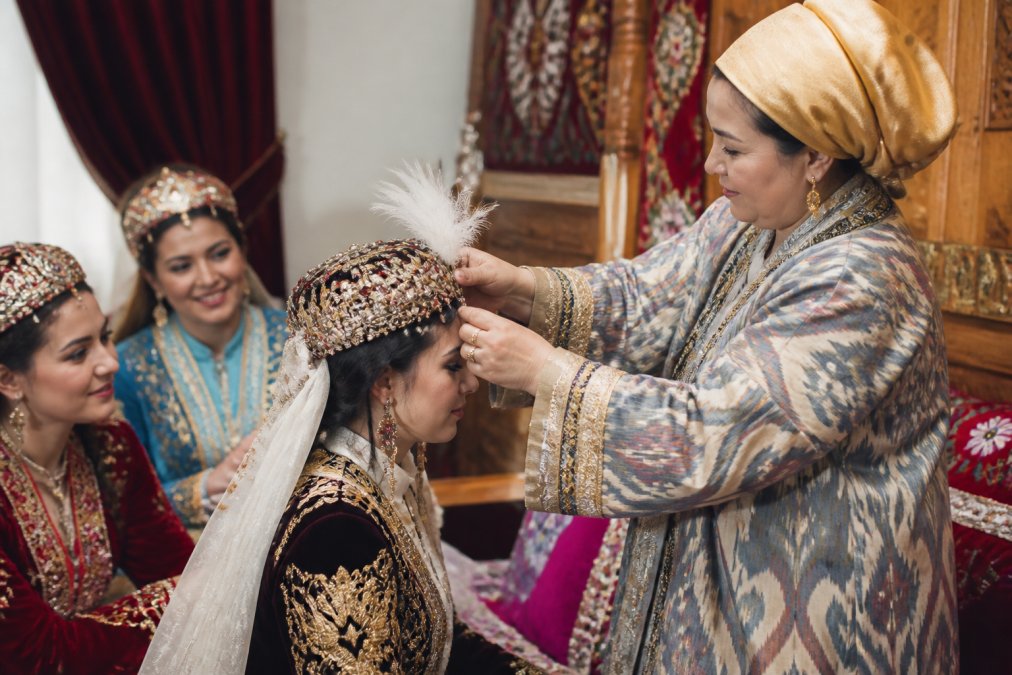
Uzbek ceremonies tend toward the most formal and embellished end of the spectrum, with hand-embroidered suzani motifs, gold-threaded fabrics, and structured layering. Kazakh celebrations often lean toward richly colored velvet and fur-trimmed outerwear in cooler months, while Kyrgyz weddings frequently feature felted wool elements and embroidered felt headwear. The unifying thread is modesty and craft, not a single uniform.
| Country | Signature Textiles | Color Leanings | Formality |
|---|---|---|---|
| Uzbek | Ikat, suzani, gold thread | Deep jewel tones | High, layered |
| Kazakh | Velvet, embroidered trim | Rich reds, blues | High, outerwear-heavy |
| Kyrgyz | Felt, wool, embroidery | Earth tones, white | Medium to high |
Modest Wedding Guest Dresses: Silhouettes That Honor Cultural Norms
The best modest wedding guest dresses for these ceremonies share three traits: they cover the shoulders and knees, they use fabric with weight and drape, and they avoid sheer or body-hugging cuts. A long-sleeved midi in a structured fabric works for nearly every ceremony. A kaftan-style silhouette works for warmer receptions. A-line and column shapes photograph beautifully and move well through long celebrations.
Layering is your friend here. A lightweight long-sleeve layer under a sleeveless dress instantly makes it appropriate, and it gives you flexibility if the event runs from a formal hall into a courtyard. Modesty in this context is not about hiding; it is about choosing silhouettes that let the textile and craftsmanship carry the look.
Styling Ikat Patterns for Formal Events Without Looking Costume-Like
Styling ikat patterns for formal events works best when you treat the pattern as the statement and keep everything else quiet. Pair one ikat piece with solid, neutral companions, minimal gold jewelry, and a clean shoe. The pattern does the talking; you do not need competing embellishment.
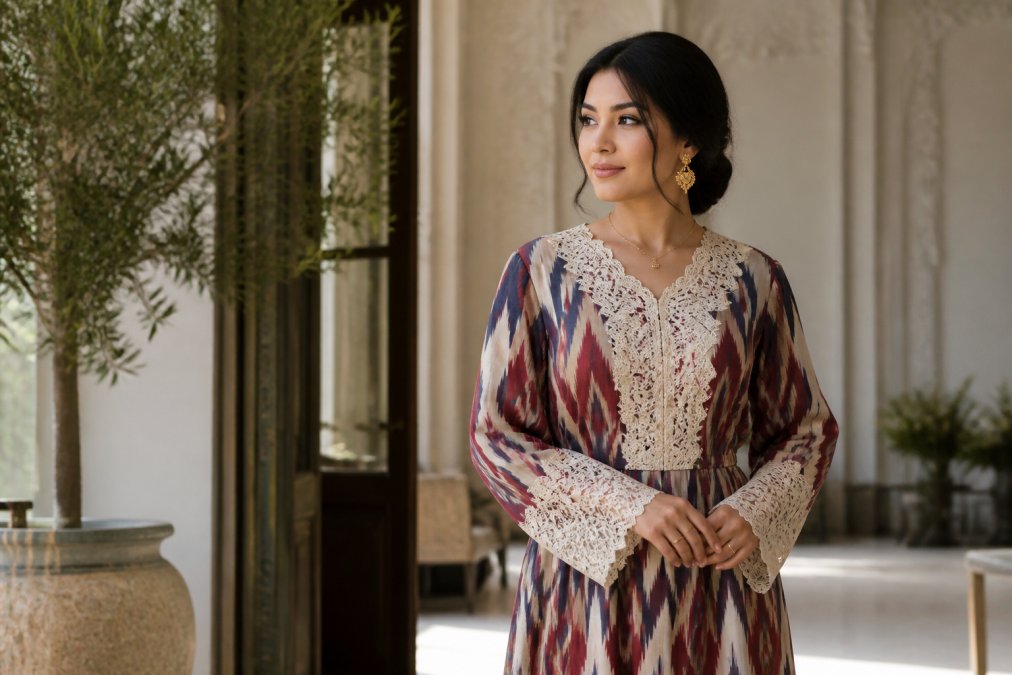
The costume effect comes from excess: too many patterns, too much gold, or a silhouette that reads as theatrical. A fitted ikat bodice with a simple skirt, or an ikat corset belt over a plain column dress, keeps the heritage reference sharp and wearable. This is the design philosophy behind Sadri Couture's ready-to-wear, which reimagines traditional Central Asian artistry through a modern lens so pieces move between a wedding and your everyday wardrobe.
Color Symbolism and Fabrics: What to Wear and What to Avoid
Color in Central Asian wedding dress is not decoration; it is a signal. Reading it correctly is the difference between looking festive and looking like you misunderstood the invitation. The rules below hold across many Central Asian celebrations, though each family applies them with its own emphasis.
White. Reserved for the bride. A full-white guest look, dress, shoes, bag, reads as a claim on her day. Off-white, cream, ivory, and white-with-a-print are usually fine, but if you are unsure, shift the base color and keep white to accessories only.
Red and deep jewel tones. The default festive register. Crimson, burgundy, emerald, sapphire, and deep violet all read as celebratory and are the safest choices for a main ceremony. In many families, red also carries a protective, life-affirming association, which is why it dominates the bride's own wardrobe and the guest crowd around her.
Black. Acceptable in urban and diaspora circles, but it reads somber in more traditional family settings. If you wear it, break it with a colored layer, a jewel-toned accessory, or an embroidered textile so the overall impression is festive rather than funereal.
Gold and metallic. Gold is the traditional prestige signal, both in jewelry and in fabric. A gold-threaded trim, a metallic sash, or a brocade panel reads as respect for the occasion. Full metallic head-to-toe reads as costume; use it as an accent.
Fabric choice matters as much as color. Silk, velvet, brocade, and heavy embroidered cotton signal that you took the occasion seriously. Jersey, thin synthetics, and anything with a beachwear or office-wear silhouette read as underdressed regardless of how much you paid. A useful test: hold the fabric up to light. If it is transparent enough to see your hand clearly, it is too sheer for a main ceremony without a lining or layer.
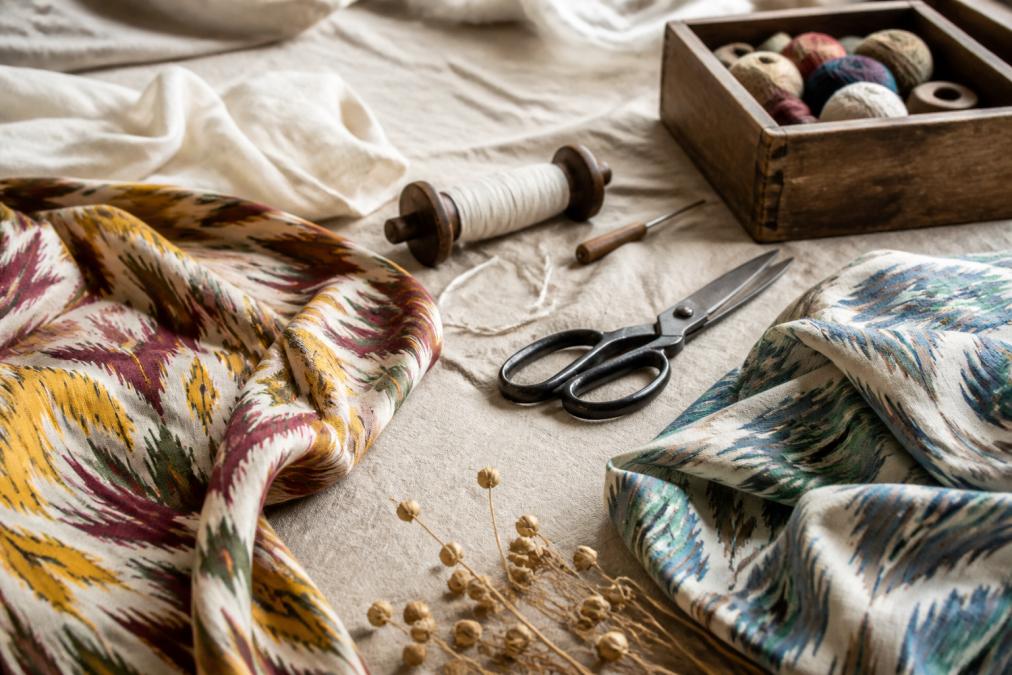
Textile literacy, briefly. Ikat is a resist-dyed woven pattern, the blur at the edges of the motif is a signature of the technique, not a printing flaw (britannica.com). Suzani is embroidery, traditionally on a cotton or silk ground, built from large circular and floral medallions. Adras is a half-silk, half-cotton ikat weave common in Uzbek dress (smithsonianmag.com). Knowing which you are wearing lets you describe it accurately and style it without over-explaining.
What to avoid. Full white, head-to-toe black in traditional settings, sheer or body-hugging cuts for the main ceremony, and anything that reads as beachwear, athleisure, or office-wear. When in doubt, choose the richer fabric and the more covered silhouette, you can always add a statement accessory, but you cannot add fabric back.
Accessories, Headwear, and Jewelry for Central Asian Weddings
Accessories finish the look and often carry the most cultural weight. Gold jewelry is the traditional default, and statement earrings or a bold cuff can anchor an otherwise simple outfit. Headwear varies by region and family tradition, so the safest approach is to follow the hosts' cues and ask a family member if you are unsure. A scarf or embroidered headpiece can be worn or carried depending on the ceremony.
Keep jewelry intentional rather than maximal. One strong piece beats five competing ones, and it keeps the focus on the garment's craftsmanship.
Practical Logistics: Multi-Day Celebrations and Seasonal Considerations
Most guides stop at "pick a nice outfit." That is the wrong frame. Many Central Asian weddings are frequently multi-day affairs, a religious ceremony, a main celebration, and one or more family gatherings, and they can span climates that range from steppe summer heat to mountain cold within a single trip. Packing is the part of this that actually determines whether you enjoy yourself.
Build a three-look core, not three separate outfits.
- Main ceremony look. Your most formal piece: a long-sleeved midi or column dress in silk, velvet, or brocade, or a tailored suit in a rich fabric. This is where the statement textile lives.
- Reception or dinner look. Slightly more relaxed. A kaftan-style silhouette, a lighter silk, or the same base with a different layer and accessory set.
- Casual family gathering look. A simple modest dress or tailored separates in a solid color, styled with one heritage accessory so it still reads as part of the same wardrobe.
Keep all three in one color family, for example, a jewel-tone base with gold accents, so shoes, bags, and jewelry work across every event. This is the single biggest packing efficiency gain, and it is the piece of advice most guests miss.
Climate and season, by region type.
- Steppe and desert summers. Dry heat, strong sun, and wide day-to-night temperature swings. Choose breathable silk, lightweight cotton, and loose silhouettes. Bring a light long-sleeve layer for evening and for indoor air conditioning, which is often aggressive.
- Mountain and foothill regions. Cooler, windier, and unpredictable. A velvet or embroidered outer layer is not optional in shoulder seasons. Felted wool elements and embroidered felt headwear fit naturally here.
- Winter celebrations. Fur-trimmed outerwear, velvet, and heavier brocade are appropriate and expected. Plan for indoor heat: layer so you can remove an outer piece without exposing shoulders or knees.
Packing mechanics that actually work.
- Roll silk and brocade rather than folding to reduce creasing; hang immediately on arrival and steam rather than iron if the fabric is delicate.
- Pack one lint roller and one small sewing kit. Embroidered and gold-threaded pieces snag easily.
- Bring two pairs of shoes maximum: one formal, one comfortable. Ceremonies involve a lot of standing, greeting, and moving between rooms.
- Carry a large scarf or shawl in your day bag. It doubles as a modesty layer, a warmth layer, and a head covering if a ceremony calls for one.
Gender-neutral and non-binary guests. The same rules apply without gendered framing: modest coverage of shoulders and knees, a rich fabric, one statement textile, and a tailored silhouette. A long tunic over wide-leg trousers, a structured long coat, or a column dress all work. If you are unsure how a specific family will read a particular silhouette, ask a family member or the couple directly, in practice, families care far more about effort and respect than about which gendered template you followed.
Gift and role coordination. If you are part of the wedding party, a close family friend, or bringing a gift on behalf of a group, your attire should sit one notch more formal than a general guest's. This is not written down anywhere, but it is a consistent pattern: the closer your role, the more the family notices what you wear. Ask the couple or a family contact what the immediate circle is planning, and match that register rather than guessing.
Frequently Asked Questions
Can I wear black or white to a Central Asian wedding?
In most Central Asian traditions, white is reserved for the bride, and black is often associated with mourning, so both are best avoided. Instead, choose festive colors like deep jewel tones, gold, or rich embroidery. If you are unsure, ask the host or a family member. Opting for a modest wedding guest dress in a vibrant hue is a safe and respectful choice.
How do I incorporate ikat or suzani patterns into my wedding guest outfit?
Start with one statement piece: an ikat dress, a suzani-embroidered clutch, or a patterned belt. Pair it with solid neutrals to let the textile stand out. For formal events, choose a structured silhouette like a midi dress or a tailored jacket. Styling ikat patterns for formal events works best when the fabric is the focus, so keep jewelry minimal and let the hand-embroidered details speak for themselves.
Is it appropriate to wear traditional Central Asian clothing as a guest?
Yes, wearing traditional attire as a guest is often seen as a sign of respect and appreciation, especially if you are attending a ceremony with cultural significance. However, avoid replicating bridal wear or religious garments. A modern interpretation, such as a modest dress with traditional textile accents, strikes the right balance. If you are not from the culture, it is polite to ask the hosts beforehand.
What are the modesty expectations for Central Asian wedding guests?
Modesty varies by country and family, but generally, shoulders and knees should be covered, and necklines should be conservative. Opt for longer sleeves and hemlines, especially for religious ceremonies. A modest wedding guest dress in a flowing fabric like silk or chiffon works well. If the wedding includes a mosque visit, bring a scarf to cover your hair. When in doubt, err on the side of more coverage.
How much money should you give at a Central Asian wedding?
Gift-giving customs differ across Central Asia. In many traditions, cash gifts are common and should be given in an odd number, as even numbers are associated with funerals. The amount depends on your relationship and local norms. Always place cash in a clean envelope and hand it to the couple or a designated family member.
Can I wear the same outfit to multiple events during a multi-day Central Asian wedding?
Multi-day celebrations often include different events like a traditional ceremony, a reception, and a farewell brunch. You can rewear pieces but should change up the styling. For example, wear a modest wedding guest dress to the ceremony, then add a different belt or jewelry for the reception. Packing versatile separates, like an ikat corset belt or a lace jacket, helps you create fresh looks without overpacking.
Dressing for these celebrations comes down to respect, fit, and a genuine connection to the craft behind the clothes. Sadri Couture designs versatile statement garments rooted in the cultural heritage of Samarkand, blending signature ikat, intricate patterns, and delicate lace into timeless pieces you can wear to a wedding and then into your everyday wardrobe. Discover the collection and find a piece that carries the occasion with modern elegance.