

Are Ikat Fabrics Durable for Work? A 2026 Guide
Table of Contents
- What Makes Ikat Fabric Durable for Work
- Workplace-Specific Durability Testing
- Ikat vs Synthetic Alternatives for Workwear
- How to Care for Ikat Fabric
- Authentic vs Printed Ikat Identification
- Pros and Cons of Ikat for Work Attire
- Frequently Asked Questions
Last Updated: September 16, 2026
What Makes Ikat Fabric Durable for Work
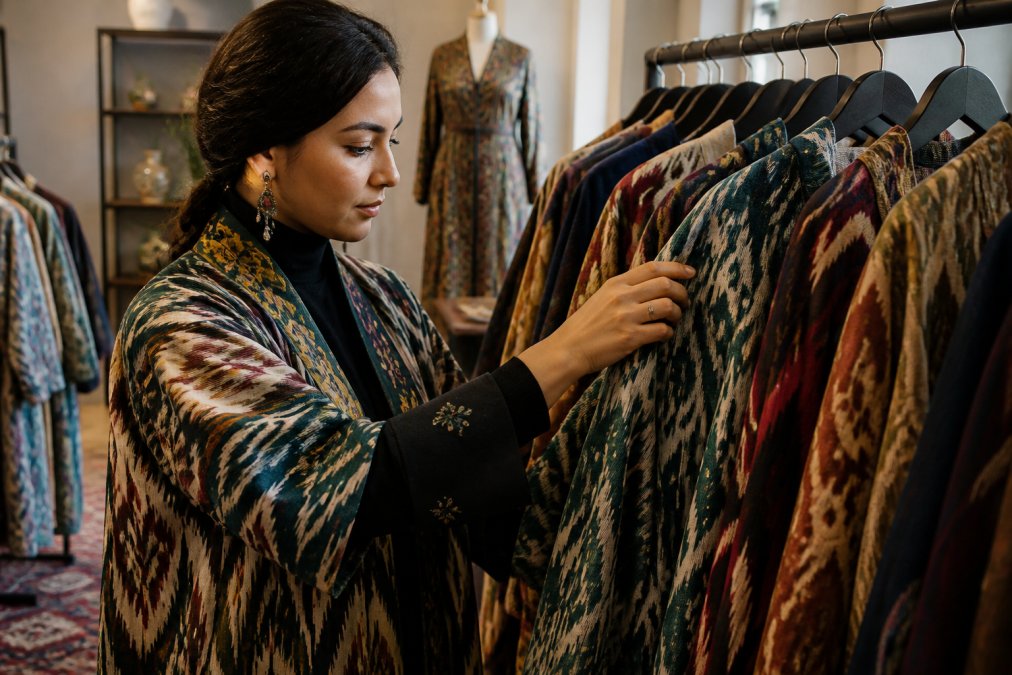
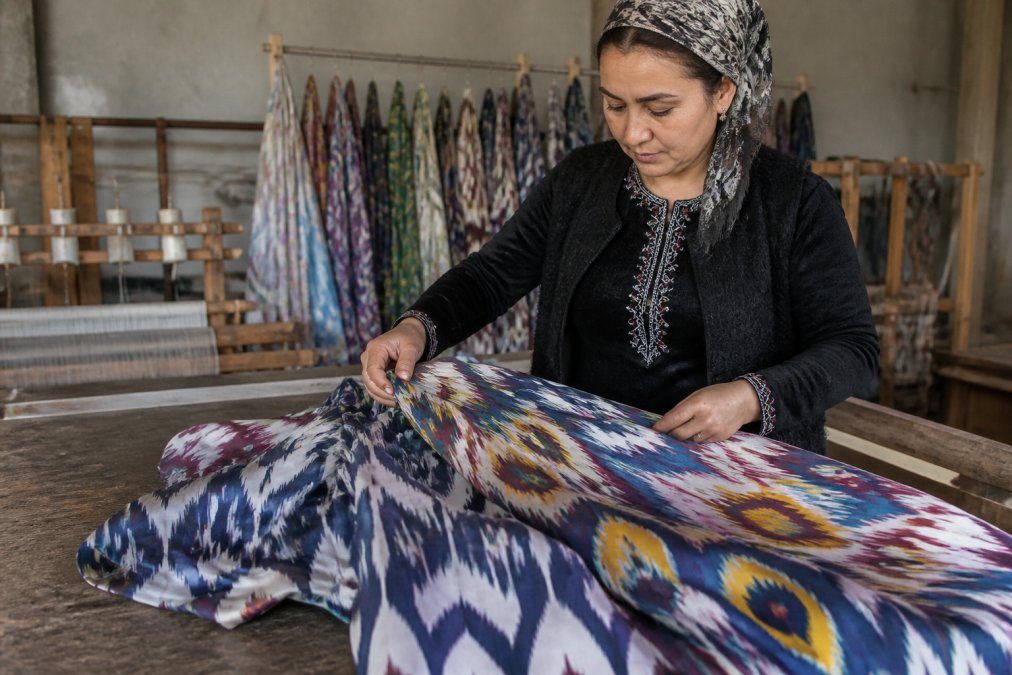
Ikat fabric is a hand-woven textile patterned through resist dyeing, where yarns are bound and dyed before weaving, and its durability for work depends on three measurable factors: fiber type, weave density, and how the finished cloth is cared for. A tightly woven cotton ikat can survive years of regular rotation in a work wardrobe. A loosely woven silk ikat will not.
The confusion starts because "ikat" describes a technique, not a fabric. Two garments can both be genuine ikat and behave completely differently under daily wear.
Fabric Weight and Weave Density
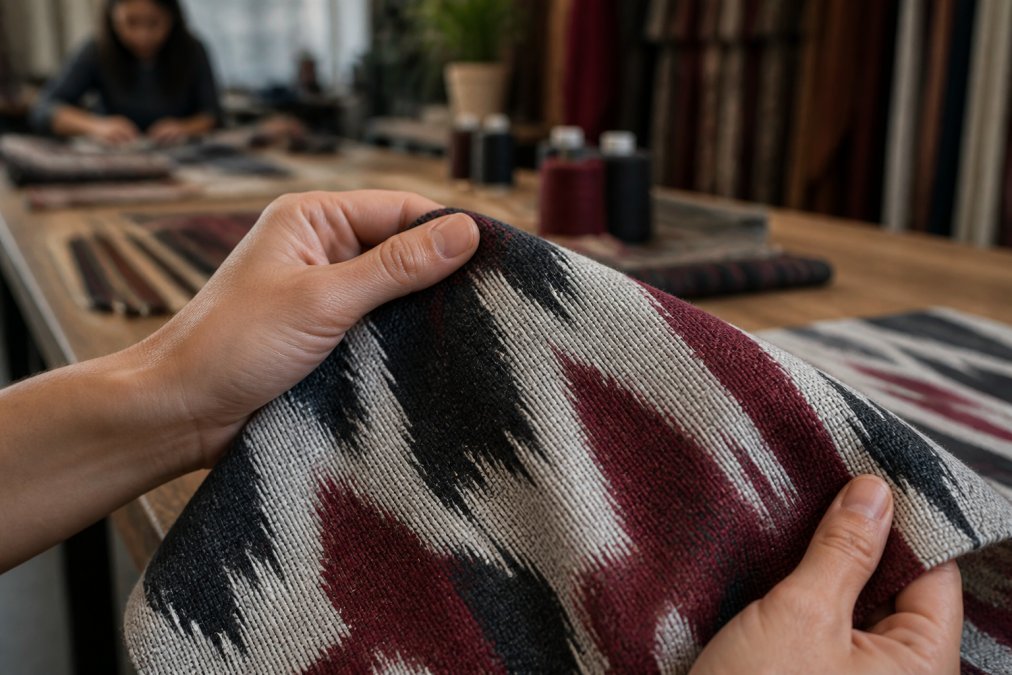
Fabric density is the strongest predictor of how an ikat garment holds up under repeated wear. Thread count and picks per inch determine how much abrasion the surface can absorb before fibers begin to separate.
Hand-woven ikat typically runs lighter and more open than industrial broadcloth. That openness is part of its character, but it matters for anyone planning to wear it five days a week.
A useful rule: if you can see daylight clearly through the cloth when held to a window, treat the piece as occasion wear rather than workwear.
Fiber Type: Cotton Ikat vs Silk Ikat
Cotton ikat and silk ikat fail in different ways. Cotton resists abrasion and laundering better; silk wins on drape and color depth but loses tensile strength faster when exposed to friction and perspiration.
| Fiber | Abrasion Resistance | Best For | Main Weakness |
|---|---|---|---|
| Cotton ikat | High | Daily rotation, structured pieces | Less sheen, heavier hand |
| Silk ikat | Moderate | Occasion wear, layering | Frays at stress points |
| Silk-cotton blend | Moderate to high | Balanced workwear | Varies by mill |
Workplace-Specific Durability Testing
Workplace durability testing for ikat comes down to four stress points that a home wash test will never reveal: seat friction, cuff and collar abrasion, underarm perspiration exposure, and strap or bag contact. Each one fails the cloth through a different mechanism, and knowing the mechanism tells you what to inspect before you buy.
Seat friction. A desk chair abrades the same square inches of fabric for hours a day. The mechanism is cyclic rubbing, which lifts surface fibers into pills and eventually thins the weave. Plain-weave cotton ikat tolerates this best; long-float weaves and silk fail first. Look for a lined seat panel or a garment cut with a back yoke that spreads the load.
Cuff and collar abrasion. These edges contact desk surfaces, keyboards, and chair arms hundreds of times a day. The mechanism is edge wear, the cut edge of the weave unravels from the outside in. Reinforced, bound, or French-finished seams roughly double the service life of a cuff. Raw or serged-only edges on hand-woven cloth are a warning sign.
Underarm perspiration exposure. Perspiration is mildly acidic and, combined with friction, accelerates fiber breakdown and can set discoloration into natural dyes. The mechanism is chemical plus mechanical. A breathable natural-fiber lining at the underarm, or a garment cut with a gusset, reduces both.
Strap and bag contact. A shoulder bag strap creates a concentrated rub line across one shoulder. The mechanism is point-load abrasion, and it is the single most common cause of premature failure on an otherwise well-made ikat jacket. A shoulder panel or a structured shoulder seam mitigates it.
Most care guides skip this entirely. They tell you how to wash a textile, not how it behaves after forty wears at a desk.
A practical assessment you can run yourself:
- Rub the fabric firmly between thumb and forefinger for 30 seconds and check for surface fuzz
- Hold it against a light source to gauge weave density
- Check seam allowances and hem finishing, the first places hand-woven cloth fails
- Confirm whether the garment is lined through high-friction areas
- Look for reinforcement at the center-back slit or closure points
- Press a thumbnail into the weave and release, a cloth that stays dented has low recovery and will bag at the seat
- Fold the cuff in half and rub the fold against itself twenty times, visible fraying means the edge finish is too thin for daily wear
If you want a simple scoring method, rate each of the four stress points as reinforced, adequate, or exposed. A garment with three or more "reinforced" ratings is a genuine workwear candidate. One with two or more "exposed" ratings is occasion wear regardless of how the fabric feels in the hand.
Ikat vs Synthetic Alternatives for Workwear
Synthetic alternatives beat ikat on pure abrasion resistance, and it is not close. Polyester blends hold shape, resist wrinkling, and tolerate frequent machine washing with minimal color loss.
What they cannot do is replicate the irregular edge that resist dyeing produces. That softness at the pattern boundary is the entire point of ikat, and it is the first thing lost in a printed imitation.
So the honest comparison is not durability versus durability. It is how much maintenance you will accept in exchange for a textile that looks like nothing else.
How to Care for Ikat Fabric
Caring for ikat fabric means limiting mechanical agitation, avoiding direct heat, and storing pieces flat or on padded hangers so the weave is not stretched out of shape.
The specifics depend on fiber. Silk ikat and structured corsetry pieces generally require professional dry cleaning, while some cotton ikat can handle a gentle cold hand wash.
General care principles that apply across the board:
- Wash rarely, and spot clean between wears
- Never wring or twist the cloth
- Dry flat, away from direct sunlight
- Steam from the reverse rather than pressing directly on the surface
- Store folded with acid-free tissue at fold lines
For structured pieces from our own collections, such as the Noor Ikat Corset, the care label reads dry clean only. That is not caution for its own sake. The paneled construction and the ikat-inspired textile both depend on shape retention, and water is the enemy of both.

Authentic vs Printed Ikat Identification
Authentic versus printed ikat identification comes down to one observable difference: in genuine ikat, the pattern is dyed into the yarn before weaving, so the edges blur and the reverse side shows the same motif. In printed ikat, the design sits on top of a finished cloth.
Three checks settle it quickly:
- Turn it over. Real ikat shows pattern on both faces. Print shows a pale or blank reverse.
- Look at the edges. Resist dyeing produces a characteristic feathering where colors meet. Print edges are crisp and uniform.
- Feel the surface. Hand-woven cloth has slight irregularity in thickness. Printed cloth feels flat and even.
The Vintage Atlas Lace Corset is a good reference point for what genuine vintage ikat atlas looks like under lace: the pattern variation from piece to piece is a feature, not a defect.

Pros and Cons of Ikat for Work Attire
Ikat works in a professional wardrobe when it is chosen for the right role, and fails when it is asked to do a job it was never built for.
Pros:
- Distinctive visual character no synthetic can replicate
- Natural fibers breathe well through a long day
- Cotton ikat holds up to regular rotation with correct care
- Pieces layer easily over plain tailoring
Cons:
- Lower abrasion resistance than polyester blends at stress points
- Dry clean only for many silk and structured pieces
- Hand-woven cloth needs more careful storage
- Higher upfront cost than mass-produced alternatives
The middle path works best for most people.
Frequently Asked Questions
Is ikat fabric suitable for daily professional wear?
Yes, when it is hand-woven from tight-weave cotton or silk. Dense ikat fabric resists abrasion and holds its shape through repeated wear. Lighter, loosely woven ikat is better for occasional use. For daily office wear, look for structured pieces like a tailored corset or lined skirt that protect the fabric from friction. Dry cleaning and rotating your garments extend their life.
How do you care for ikat garments to ensure longevity?
Dry clean only for silk and structured ikat pieces. Avoid wringing, bleach, and direct sunlight. Store folded or on padded hangers away from rough surfaces. Steam on low heat from the reverse side to remove wrinkles. Proper care preserves fiber integrity and colorfastness for years.
What is the difference between authentic hand-woven ikat and printed ikat?
Authentic ikat is made by resist-dyeing yarns before weaving, so the pattern has slight blurring at the edges and appears on both sides. Printed ikat is a design stamped onto finished fabric, with sharp edges and a pattern that sits only on the surface. Hand-woven ikat also has variations in thread thickness and color depth that prints lack. Check the fabric's reverse side and feel for texture.
Does ikat fabric wrinkle easily?
Cotton ikat wrinkles more than silk or blends. Silk ikat resists creasing and drapes smoothly, making it better for workwear. Tightly woven ikat holds shape better than loose weaves. Hang garments promptly after wearing and use a low-heat steamer to release wrinkles. Storing pieces flat or on padded hangers also reduces creasing between wears.
The real challenge with ikat at work is not whether the fabric can take it, but whether you are willing to care for it properly. Sadri Couture designs with that balance in mind, using signature ikat, intricate patterns, and delicate lace across versatile ready-to-wear pieces made to move between the office and everything after it. Discover the collection and find the piece that earns its place in your weekly rotation.