

Is Ikat Fabric Durable for Everyday Wear?
Table of Contents
- What Makes Ikat Fabric Durable for Daily Wear
- Authentic vs Printed Ikat: Which Lasts Longer
- How to Care for Ikat Fabric to Maximize Durability
- Ikat for Everyday Wear vs Special Occasions
- Identifying High-Quality Ikat That Withstands Regular Use
- How Ikat Garments Age and Evolve
- Styling Ikat for Work and Professional Environments
- Frequently Asked Questions
Last Updated: September 30, 2026
What Makes Ikat Fabric Durable for Daily Wear
Is ikat fabric durable for everyday wear? The short answer is yes, but with important caveats about fiber type, construction method, and care. Authentic handwoven ikat can absolutely withstand regular use, many pieces improve with age. The key difference lies in how the fabric is made and what you're comparing it against.
Handwoven ikat garments have been worn daily for centuries across Central Asia. The durability question isn't whether ikat works for everyday life, it's whether the specific piece you own was made to last.
The Role of Fiber Type and Weave Structure
The fiber composition determines everything. Cotton ikat is breathable and practical for warm climates. Silk ikat offers elegance but requires more careful handling. Blends give you a middle ground: durability plus some of silk's visual appeal.
Handloom construction creates a tighter, more resilient weave than industrial alternatives. When threads are woven by hand, tension remains consistent. This consistency prevents the loose spots that cause premature wear. The interlocking of warp and weft fibers in a handwoven textile creates natural reinforcement at stress points.
A quality handloom ikat piece can handle regular use without significant deterioration. The craftsmanship that goes into the weaving structure directly translates to longevity.
How Handwoven Construction Affects Longevity
Handwoven fabrics have denser fiber packing than machine-loomed alternatives. This density means the fabric resists pilling, snagging, and general wear. Artisans adjust tension throughout the weaving process, creating uniform strength across the entire piece.
Machine-loomed ikat, by contrast, prioritizes speed. Faster production means less attention to individual thread tension. The result is a fabric that looks right but wears faster.
The difference becomes obvious after a year of regular wear. Handwoven pieces maintain their shape and integrity. Machine-loomed pieces develop thin spots and lose structural integrity more quickly.
Authentic vs Printed Ikat: Which Lasts Longer
This distinction matters more than most people realize. Authentic ikat is woven with dyed threads. The pattern comes from the dyeing process itself, not applied afterward. Printed ikat uses surface printing techniques to create the appearance of ikat without the actual dyeing process.
Authentic woven-in ikat lasts significantly longer than surface-printed versions. Here's why: the color is part of the fiber structure, not sitting on top of it.
Why Woven-In Patterns Resist Fading
When threads are dyed before weaving, the color penetrates the fiber completely. Friction, sunlight, and washing affect the surface, but the core of each thread retains its color. This is why authentic ikat pieces often look better after years of wear, the fading is subtle and even.
Woven-in patterns also resist color bleeding. The dye is already set into the fiber. Water and detergent don't strip it away the way they do with surface applications.
A handwoven ikat piece from Sadri Couture's collection is designed to maintain color vibrancy because the pattern is integral to the fabric itself. The Noor Ikat Skirt, for example, uses authentic ikat-inspired weaving that keeps its character through countless wears.

Surface-Printed Ikat and Wear Patterns
Printed ikat applies color to the fabric surface after weaving. This is cheaper and faster, which is why it dominates mass-market options. But the durability trade-off is real.
Surface printing creates a layer that sits on top of the fibers. Friction wears this layer away. After regular use, printed ikat often shows visible wear patterns, areas where the color has faded or flaked.
The print also tends to crack or peel at stress points: seams, folds, areas of frequent movement. This is especially noticeable in garments worn regularly.
If durability matters to you, authentic woven ikat is the only choice for everyday wear.
How to Care for Ikat Fabric to Maximize Durability
The best ikat fabric still requires proper care. How you wash, dry, and store your pieces determines how long they'll actually last.
Washing and Drying Best Practices
Hand washing is ideal for ikat garments. Cold water prevents color bleeding and protects fiber integrity. Use mild detergent, the kind designed for delicate fabrics or hand-washing.
Submerge the garment and gently agitate for 3-5 minutes. Don't scrub or wring. Rinse in cool water until the water runs clear. This removes soap residue that can dull the fabric.
For drying, skip the machine. Air dry flat or hanging. Direct sunlight can fade even authentic ikat over time, so dry in shade when possible. Never use heat, dryers damage the weave structure and can set stains permanently.
If professional dry cleaning is recommended (as with The Marvorid Top or the Noor Ikat Corset), follow that guidance. Professional cleaners use solvents that protect delicate weaves.

Storage and Handling to Preserve Fiber Integrity
Store ikat pieces flat or hanging on padded hangers. Tight folding creates creases that stress fibers and can lead to permanent damage.
Use acid-free tissue paper between folds if you must fold. This prevents color transfer and protects against moisture damage. Keep pieces in a cool, dry space away from direct sunlight.
Humidity matters. Damp storage encourages mildew and weakens fibers. A dry closet is ideal. If you live in a humid climate, consider moisture-absorbing packets in your storage area.
Handle ikat garments with clean, dry hands. Oils from skin can transfer to the fabric and create permanent marks. This is especially important for lighter-colored ikat pieces.
Ikat for Everyday Wear vs Special Occasions
The real test of durability is whether ikat works as everyday clothing, not just for special events. Many people assume heritage textiles belong in a closet, brought out rarely. That's a mistake.
Authentic ikat is designed for regular wear. The pieces hold up because they're made to be worn.
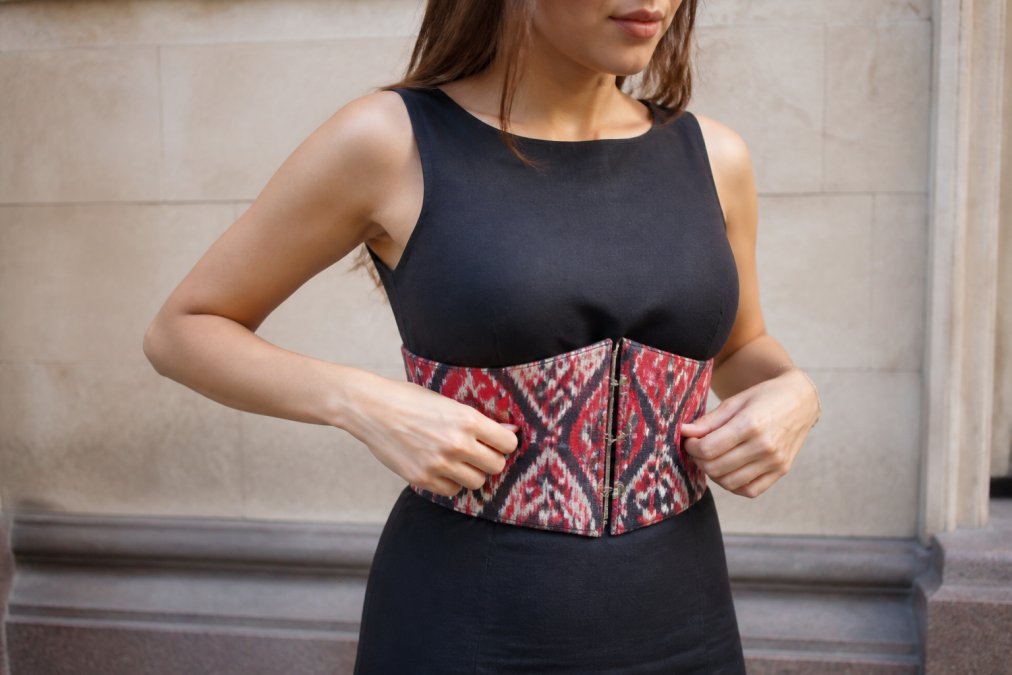
The Marvorid Reversible Ikat Corset Belt demonstrates this perfectly. It's structured enough for professional settings but works equally well with casual pieces. The duchess satin construction means it handles regular use without deterioration.
The key is choosing pieces designed for your lifestyle. A heavily structured corset with hand-finished details can handle professional wear. A lighter ikat scarf works for casual layering. Match the garment's construction to how you'll actually wear it.
Pieces from Sadri Couture are specifically designed to integrate with everyday wardrobes. The Marvorid Top pairs with tailored trousers or denim. The Noor Ikat Skirt works with fitted tops for work or flowing pieces for evening. These aren't costume pieces, they're wearable, durable garments that age beautifully.

Identifying High-Quality Ikat That Withstands Regular Use
Not all ikat is created equal. Learning to spot quality separates pieces that last years from those that fade and wear within months.
What to Look for in Handloom Construction
Run your hand across the fabric. Quality handwoven ikat feels substantial. The weave is tight and consistent. You shouldn't feel loose threads or thin spots.
Check the selvage, the finished edge of the fabric. Handwoven pieces have tightly finished selvages with minimal fraying. Machine-loomed fabric often has looser, more irregular edges.
Look at the back of the fabric. Handwoven ikat maintains consistent pattern on both sides. Surface-printed ikat shows obvious printing on one side and plain fabric on the other.
Feel the weight. Quality ikat has substance. It doesn't feel papery or thin. The fibers should feel tightly bound together.
Examine the seams and construction details. Sadri Couture pieces feature finished seams, proper lining, and attention to structural integrity. These details indicate a garment built to last.
Colorfastness and Natural Dyes
Natural dyes used in authentic ikat create colors that can age gracefully. Synthetic dyes can be vibrant but may fade unevenly or shift color unexpectedly.
Natural dyes can cost more and may require more skill, but they can deliver superior longevity and aging characteristics.
The pattern itself can tell you about dye quality. Natural dyes can create subtle color variations across the fabric. This variation can be a sign of authenticity and durability.
How Ikat Garments Age and Evolve
One of ikat's greatest strengths is how it improves with age. This isn't degradation, it's character development.
Styling Ikat for Work and Professional Environments
Ikat doesn't belong only at cultural events. These pieces integrate seamlessly into professional wardrobes when styled thoughtfully.
| Care Method | Best For | Frequency | Result |
|---|---|---|---|
| Hand washing in cold water | Regular everyday wear | Every 4-6 wears | Preserves color and fiber integrity |
| Professional dry cleaning | Delicate pieces (corsets, lined garments) | Annually or as needed | Maintains structure without damage |
| Air drying flat or hanging | All ikat pieces | Always | Prevents shrinking and shape loss |
| Storage in cool, dry space | Long-term preservation | Continuous | Prevents fading and mildew |
Frequently Asked Questions
Does ikat fabric fade easily with regular use?
Authentic handwoven ikat resists fading better than surface-printed alternatives because the color is woven into the fiber itself during the dyeing process. Natural dyes used in traditional ikat can develop character over time rather than deteriorating quickly. Printed ikat may show wear in high-friction areas like seams and hems. Proper care, avoiding excessive sunlight and using gentle washing, preserves colorfastness significantly.
How do you identify high-quality, durable ikat fabric?
Look for tight, consistent weaving with no loose threads or gaps in the handloom structure. Authentic ikat can have slightly irregular edges on the pattern due to the tie-dye process, while printed versions may appear perfectly sharp. Feel the weight and density: quality ikat uses natural fibers like cotton or silk with substantial body. Check fiber content on the label and examine the selvedge (woven edge) for signs of careful handcraft.
Is ikat fabric suitable for professional work environments?
Yes. High-quality ikat pieces like structured tops and tailored corsets work well in professional settings when styled appropriately. The refined craftsmanship and sophisticated aesthetic of pieces like the Marvorid Top or Noor Ikat Corset pair seamlessly with business attire. Pair ikat garments with neutral tailored trousers or skirts to maintain a polished look. The durability of authentic handwoven ikat makes these pieces practical for regular office wear.
How does hand-loomed ikat compare to mass-produced ikat in terms of durability?
Hand-loomed ikat typically outlasts mass-produced versions because artisans can use tighter weaving techniques and often select higher-quality fibers. The handloom process can create superior fiber integrity and density, which resists pilling and wear. Mass-produced ikat often uses looser weaves to reduce production time and cost. Handwoven pieces also tend to age gracefully, developing character rather than visible wear. Sadri Couture's handwoven-inspired pieces reflect this commitment to longevity and craftsmanship.